Category: Family (PHAMILY)

Can God feel my pain?

By Mr. James Harris

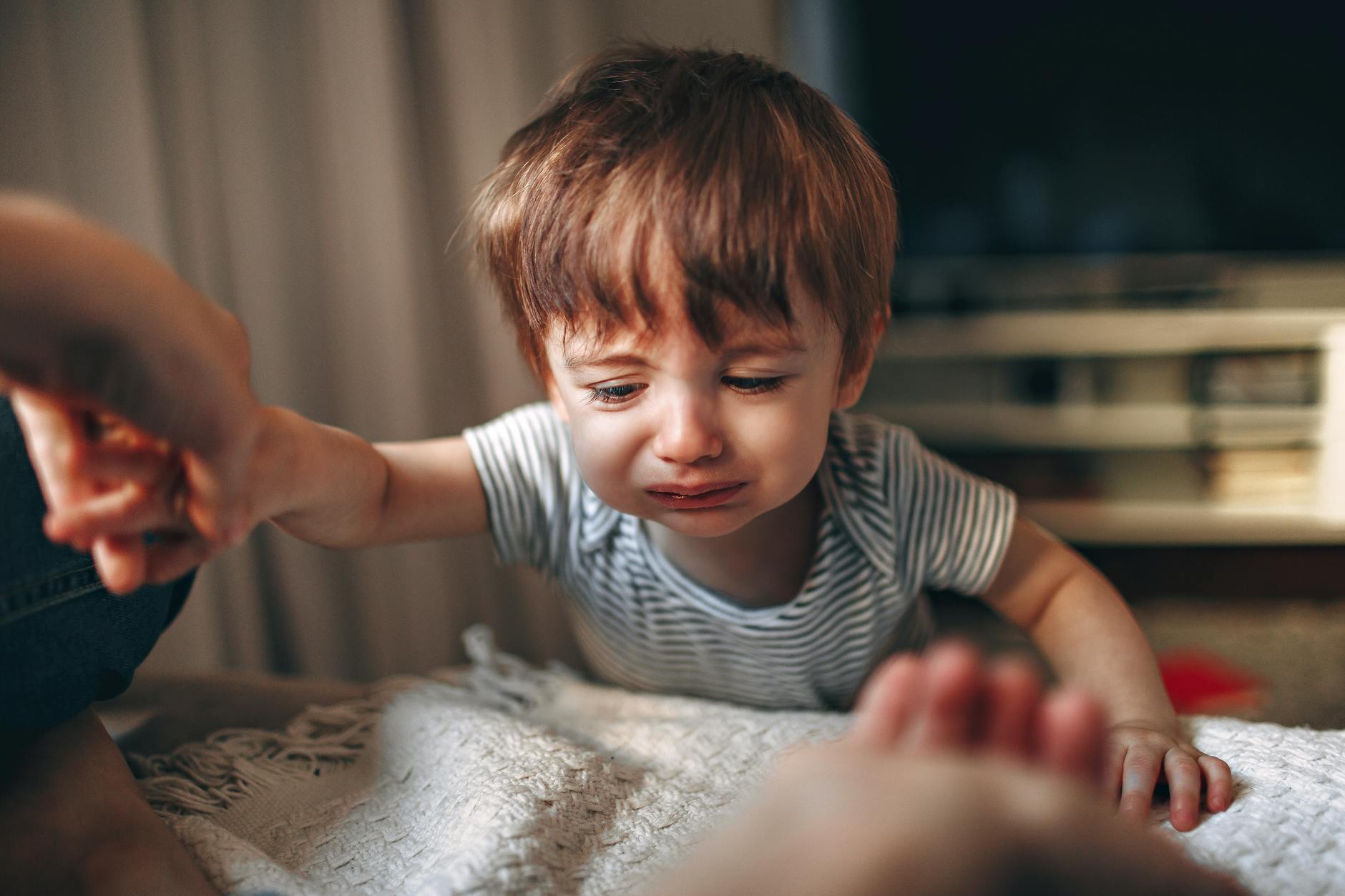
Photo by Helena Lopes on Pexels.com

One night we had to take our youngest son to the ER because he was complaining of stomach pains. He was only 3 years old so describing the depth of the pain, he could not do, all he could say was, “Mommy Daddy it hurt, and pointed to his stomach.”

We took him and began to examine him. The nurse said she needed to take some blood to see if it was something they needed to treat. I will never forget what happened next as the nurse pulled out the needle to draw blood from his little arm. Wanda said to me “I cannot watch this” and left the room. There I stood having to hold him down to allow them to take his blood. I will never forget the look in his eyes, as the tears began to fall. He could not understand how his father could allow someone to hurt him like that.

We think that our Heavenly Father has no feelings or understanding of the pain in our hearts or the things that we have to bear in our daily lives. I am not sure where that lie came from but it is a big lie from the pit of hell. Jesus sets the record straight in Matt. 6:26 (NIV) about how the Father cares for us.

“Look at the birds of the air; they do not sow or reap or store away in barns, and yet your heavenly Father feeds them. Are you not much more valuable than they?”

I love my sons but God loves them and you and I much more than we have the capacity to totally understand. Jesus, the son of God became the son of man, so we the sons of men could become sons of God. Our Father wanted His Family back.

Blessings, James Harris

Women in entertainment share their stories of abuse (National Domestic Violence Hotline, 1.800.799.3224)

By Angela Wilson | UAB Community Health & Human Services Program Intern

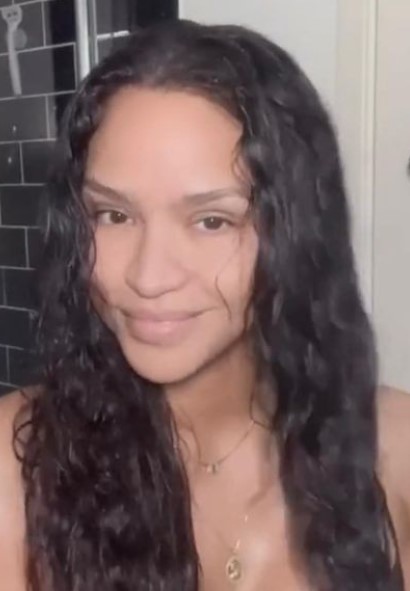
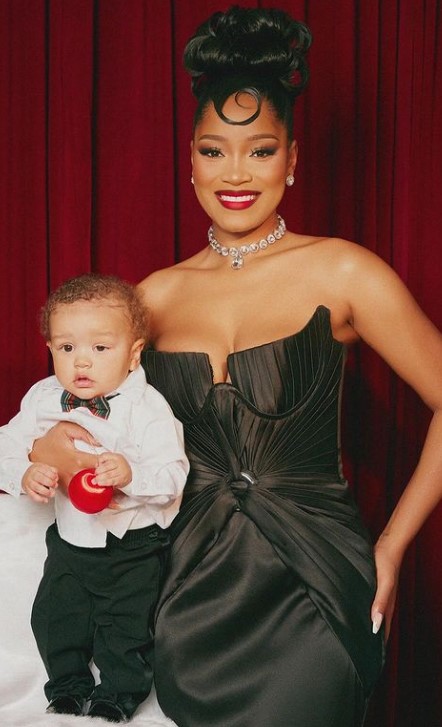
Keke Palmer is an established actor, singer, and television host. She made history by becoming the first and youngest African American woman to play Cinderella on Broadway.  Cassandra Ventura (Cassie) is a singer, songwriter, dancer, model, and actress. Both ladies have amassed millions of fans who adore their work and respect their craft. They are constant fixtures on social media, of achieved both fame and fortune, and in committed relationships. Keke has a four-month-old baby with boyfriend Darius Jackson and Cassie has 2 children with hubby Alex Fine. These two ladies seem to have a life that most would envy. But unfortunately, according to them, they have endured rocky moments: Cassie in a previous relationship with another well-known celebrity.

Keke Palmer sent shockwaves through the entertainment world in November of 2023 when she requested (and received) a temporary protection order and sole custody of her 6-month-old child with boyfriend Darius Jackson whom she alleged physically assaulted her. She also revealed pictures on Instagram that appeared to confirm these allegations.

Cassandra Ventura (Cassie), shocked the hip-hop world when she alleged physical and sexual abuse by Sean Love Combs, also known as Puff Daddy, P. Diddy, and Brother Love. Puff Daddy is very well-known in the entertainment industry for being a singer, songwriter, record producer, actor and philanthropist. Puff Daddy settled with Cassie a day after her civil lawsuit was filed for an undisclosed amount of money. Although settled in court, Cassie’s claims does shine a light on harsh realities and adverse experiences she endured while starting a career in the music industry. After spending years in darkness, Cassie has exclaimed her desire to speak up so that she could help other women who may also be in abusive relationships. Since her public allegations were made, three other women have come forward with accusations of physical and sexual abuse against Puff Daddy.

KeKe and Cassie’s resilience should be celebrated and their efforts to “speak up” are applauded by many. Their story is one of adverse experiences, but continues to provide HOPE for many who are following their journeys. For example, KeKe hosted the Soul Train Music Awards in November 2023, performing an emotional song called “Ungorgeous,” baring her soul and family challenges. KeKe has many projects in the works and is continuing to focus on her family. Cassie too is enjoying motherhood, her role as a wife to a loving husband, and continues her modeling career. They both are living models of encouragement for overcoming hardships in intimate partner violence (IPV).

According to the Domestic Violence Hotline, 3 out 10 women have experienced rape, physical violence, and/or stalking by a partner and reported it having a related impact on their functioning. Additionally, IPV affects more than 12 million people every year in the United States. Domestic abuse is never okay!  If you or someone you know is in an abusive relationship, there is help. The National Domestic Violence Hotline operates 24 hours a day, 7 days a week. You can call, send a text message, or start a chat. They offer care, support, and advocacy and can be reached at 1-800-799-SAFE (7233), or by texting “START” to 88788.

Hitting the Hot 100, checking STD stats, checking your STD status

Angela Wilson | UAB Community Health & Human Services Intern

Sexyy Red is the latest Hip-Hop sensation and cultural phenomenon.  She cemented herself as a mainstream artist with her break-out hit “Pound Town” and partnered up with Niki Minaj on the certified Gold hit entitled “Pound Town 2″, debuting at No. 66 on the Billboard Hot 100. Unfiltered, the rapper’s lyrics may be considered a bit “raunchy” for some listeners. Still, she has fans, many fans, amassing over 1.7 million followers on Instagram and is currently the opening act for mega-entertainer and rapper, Drake.  Often dawning pierced lips, eccentric hairstyles, and revealing clothes, Sexyy Red is a rising star in the rap and hip-hop genre. It appears many enjoy her message of sexual freedom, but some may also take issue with her messages, portrayal of Black women, or the way she discusses sexual experiences openly.

Sexy Red, whose real name is Janae Wherry, has been receiving tons of backlash lately after proclaiming herself “the raw dog queen” on Lil Yahty’s podcast. “Raw dog” is a saying that means “having unprotected sex.” She also revealed that she does not like condoms or latex and claimed that they make her private area smell. It did not take long for her comments to hit Facebook, Instagram, Twitter, and other forms of social media; with some disapproval and others claiming that she’s “keeping it real.”

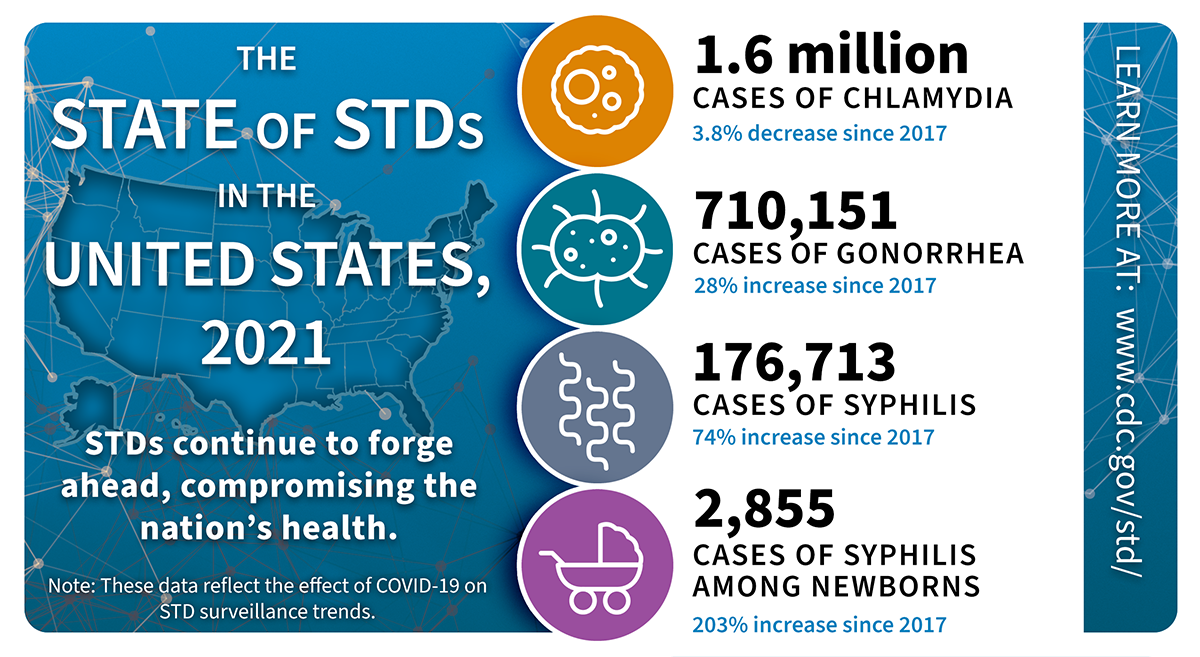
It is easy to understand the concerns about the some of the statements Sexy Red made in her interview. Still, it is important to raise awareness about some specific concerns if one chooses to engage in sexual activity. Check out the graphic from the Centers for Disease Control and Prevention (CDC) below regarding sexually transmitted diseases (STDs) in the United States.

Additionally, it is important to understand that consistent and correct use of latex condoms can drastically reduce the risk of gonorrhea, chlamydia, and trichomoniasis. Latex condoms can also reduce the risk of genital herpes, syphilis, and chancroid, working when a person’s infected area or site of potential exposure is protected (CDC, 2023). Check out the links with each sexually transmitted infection or disease (STI or STD) to learn the facts about each.

If someone has concerns about latex condoms, some condoms are made of other materials (i.e., polyurethane, polyisoprene, and nitrile) are great for people who have latex allergies or sensitivities. Still, these condoms may be slightly less effective at preventing STDs than condoms made from latex (Marfatia, Pandya, & Mehta, 2015).

If choosing to engage in sexual activities, health experts from the CDC and Planned Parenthood encourage individuals to consider the following tips:

For more tips and to learn more about protecting yourself during sexual activities, please check out the links above. Want to talk some more, check out our Facebook page here: @phame.us.impact.

References

Center for Disease Control and Prevention. (2023, September 5). U.S. STI Epidemic Showed No Signs of Slowing Down in 2021 – Cases Continued to Escalate. https://www.cdc.gov/nchhstp/newsroom/2023/STD-Surveillance-Report-2021-media-statement.html

Center for Disease Control and Prevention. (2023, September 5). How can I Protect Myself from HIV?. https://www.cdc.gov/hiv/basics/hiv-prevention/protect-yourself-during-sex.html

Marfatia YS, Pandya I, Mehta K. Condoms: past, present, and futureIndian J Sex Transm Dis AIDS. 2015;36(2):133–9. doi:10.4103/0253-7184.167135

Light of the World, LLC. – Birmingham business aiming to bring light to mental health issues.

Amanda Benko | UAB Community Health and Human Services Intern

Photo by cottonbro studio on Pexels.com

Last weekend I had the pleasure of meeting with Mr. Xavien Tate, Chief Executive Officer for a local business called “Light of the World.” At his launch party, Mr. Tate was kind enough to inform us of the many services offered by his group. Everything from travel therapy, financial therapy, peer coaching, life coaching (individual and group setting), and much more. Mr. Tate says his inspiration comes from the Bible; “Let your light shine before men in such a way that they may see your good works and glorify your Father who is in heaven.” Matthew 5:16

What impressed me most was that he offers cleaning therapy. Not many people realize that there is a correlation between mental health and cleanliness in the home. Often when mental health issues take over, the home can become overwhelmingly daunting and thus only worsen. Mr. Tate recognizes an issue and a need for these matters. Check out the live video on Wilkinson’s Wellness Lab for an interview with Mr. Tate and his staff. Please check out this local business, and help be the light of the world.

To learn more or seek assistance, please check out lwicorp.org or follow on Facebook: https://www.facebook.com/LWICORPLLC or visit: https://www.lwicorp.org/

Dear Black Girl & Dear Black Boy: Interview with author Dr. Cheri Langley

By Angela Wilson | UAB Community Health & Human Services Intern

Photo by Jairo David Arboleda on Pexels.com

I had the privilege of interviewing the author of Dear Black Girl and Dear Black Boy.  Dr. Cheri N. Langley wrote these books that brings visibility, perspective, and awareness to some of the issues that impact African American boys and girls.  These short, colorful poems help children process some of the racial tensions that they are facing in society.  Dr, Langley further acknowledges that being a black boy in America can carry anxiety and she offers advice on how to engage with law enforcement that could possibly save lives.

In Dear Black Girl, Dr. Langley approaches the issues of racism, sexism, and misogynistic stereotypes experienced by young African American girls. This literature is to invoke conversation and facilitate a healthy dialogue between young black girls and their parents and caregivers.  The language in both books is in poetry form with pictures that are captivating. Dr. Langley does an outstanding job with describing the life of young African American children and commanding their attention to these stories. Her dedication is inscribed at the beginning of the story where she assures her audience that they are loved, and their voices are heard. She brilliantly puts discussion questions at the end of the books that parents can use to help their children understand the contents and purpose. These books serve to bring truth, facts, and compassion to African American children who may not have a voice. Dr. Langley feels that it is important for children of other races to read the book so they can see the lives of their African American peers through their lens.

Dr. Cheryl Langley’s inspiration for Dear Black Boy came from watching the video of George Floyd. Being the mother of two black sons, she said she could not just “look away” from such a horrific incident and felt the need to write to reach little black boys who may be crying out for help.  Dr. Langley is an advocate for underserved and minority populations and has been heavily involved with research involving HIV and AIDS, and sexually transmitted infections awareness and prevention.  She uses her background in behavioral sciences and her work through novels and poems to help facilitate her journey to create positive change, protest injustices, and increase dialogue regarding systemic inequality.  

If you are interested in purchasing either of these works, please check out: https://www.amazon.com/stores/Dr.%20Cheri%20N%20Langley/author/B097QQL3RW

References:

Langley, C. (2023). Dear Black Boy. Dear Black Girl. Langleyresearch.org

Watching Violent Crime on the News – Does It Impact Your Health?

Angela R. Wilson | Intern UAB School of Education | CHHS

Photo by cottonbro studio on Pexels.com

We see it every day, it is on the local news, it is on social media, radio stations and even discussed on college campuses and work sites.  Violent Crime seems to be trending in an upward trajectory across the country. Mass shootings, murders, rapes, assaults, and robberies; it is paramount that we remain vigilant of our surroundings to try to stay safe. With violent crimes increasing since the pandemic, many people are afraid to do simple things like go shopping, go to the movies, or even sit on their front porches.  Obviously, crime is affecting how people work in their daily lives, but does it also impact your health?  The short answer is Yes.

According to the Center for Disease Control and Prevention, violent crime not only contributes to physical injuries, but also can manifest other mental health diseases such as anxiety, post-traumatic stress disorder, (PTSD), feelings of distress, and depression. Additionally, there is a strong correlation between violent crime and the development of diseases like obesity, diabetes, high blood pressure, asthma, gastrointestinal disorders, neurological and musculoskeletal disease, and lung disease. These conditions can have significant detrimental consequences on the health and well-being of people, families, and communities.   People who see violence regularly may also experience loneliness and isolation and may resort to binge drinking and indulging in tobacco products. They are less likely to participate in healthy behaviors, such as bicycling, walking, using parks, and other recreational spaces and may not invest in proper nutrition or take prescribed medication.

As many local, state, federal agencies and politicians’ network to find viable strategies to quell some of the violence, it is extremely important to employ coping mechanisms to protect your physical and emotional health.  Identifying support systems, resources, self-care, deep breathing, meditation and participating in faith-based activities are a few strategies that may be beneficial. Also, while we need to be aware of things that happen in our communities that may be violent in nature, we must be careful not to become overly consumed. Taking the necessary steps to protect your physical, emotional, and mental health, are paramount, even if that means not watching the news sometimes.

References

The Center for Disease Control and Prevention. (2022). Community Violence Prevention. https://www.cdc.gov.

Vinney, C. (2022). What is the Impact of Violent Media on Mental Health? https://www.verywellmind.com.

City of Birmingham and Birmingham City Schools working to improve child reading ability

By Angela Wilson | UAB Community Health & Human Services Intern

Photo by RODNAE Productions on Pexels.com

Page pals is a reading initiative created in a partnership between the City of Birmingham and Birmingham City Schools (BCS) with the purpose of improving student’s reading ability, specifically third graders. This initiative is in response to the Alabama Literacy Act, a law that when fully implemented, will prevent a third grade student who is not reading on grade level from moving up to the fourth grade, essentially being “held back” in third grade. Although parents and students will have the ability to go through a remediation process to improve student reading ability, the law is of great concern as only 56% of 3rd grade students in Birmingham City Schools are effectively achieving grade level reading as measured by the 2021 State of Alabama Comprehensive Assessment Program (ACAP).

The City of Birmingham is supporting BCS on-going efforts to improve student reading ability by asking members from the local community, non-profit groups, and corporations to volunteer some of their time to read with the BCS students. Reading to children improves their opportunity to hear others read outside of their normal classroom setting. These efforts have proven to be very beneficial to the students and may boost their interest and proficiency in reading.

Are you interested in volunteering? Page Pals volunteers go into one of the BCS elementary schools during the students’ library times, spending about thirty minutes of reading time with the students. Volunteers may choose from a list of schools, dates, and times that work best with their schedule. During their selected time, volunteers will read a book to the students that follows a curriculum created by BCS to help them build the background knowledge in science and social studies and to better prepare them for their standardized testing that occurs in April. Volunteers are encouraged to engage with the students by asking them questions periodically, reiterating comprehension and understanding about the book being read, and help grow their love for reading; thereby making a strong connection impact so that they perform better on their Alabama Comprehensive Assessment.

Our local children need our help to ensure their future remains bright, so let’s help to light their path to a brighter future. Sign up to become a Page Pal volunteer. It is easy and free! Simply visit https://www.signupgenius.com/go/springpagepals#/ and select your school choice, date and time. Now you’re all set!  If you ‘d like more information about the Page Pals program, you can follow this link at https://www.bhamyouthfirst.org/page-pals/.

Acknowledgement: PHAME-US.com would like to thank you to Mr. Marquise Hollingsworth for your time in support of this blogpost.

Brittney Griner and Russian Prison Release

By Terrie Johnson | UAB Community Health & Human Services Intern

Credit: Britney Griner Instagram

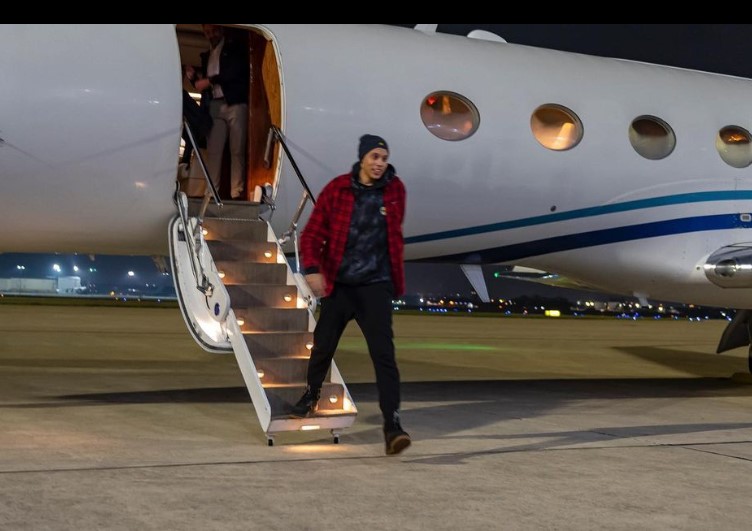
The release of Brittney Griner from Russian imprisonment garnered a great deal of attention from around the nation. Brittney Griner is a two-time Olympic gold medalist and WNBA athlete that was detained at a Russian airport in 2022. Russian officials accused Griner of being in possession of CBD cartridges which is illegal in the country. However, 10 months after being sentenced to nine years in prison, she is back on America soil thanks to a highly controversial prison swap. As such, her homecoming is both joy-filled and packed with the reality of possible lifelong mental health implications.   

CNN Reporters Salahieh and Yan shared Griner was held in an imprisonment camp for women that provided beds insufficient for a small child. Standing six feet nine inches tall, this was one component of her captivity that prevented her from getting sleep. Additionally, the camp forced women to sew as a form of intensive labor. However, Griner was too tall to sit at the tables and her hands were too large for the sewing machines. As a last resort, she was assigned to carrying the fabric used to create various garments. Most notably, Griner was forced to cut her signature locs which nearly reached her waistline. This was considered necessary since Griner could not dry her hair in the frigid temperatures of Russia and constantly battled the flu and pneumonia from exposed, wet hair. Along with these inconveniences, there were numerous aspects of the experience that would cause Griner to need the professional help of a therapist to strengthen her mental state.

As such, it is highly recommended that Griner and her loved ones that have been a part of the journey receive psychological counseling to address any emergent issues. Acknowledging being imprisoned in another country, serving as a political pawn for world leaders, being deemed unworthy for a prisoner swap, and being separated from family; it is imperative that Griner gets the supports she may need. Griner and her family may need to unpack the difficulties of being detained in another country, serving in a penal colony, and dealing with the anxiety of release. This can be achieved in individual counseling, group counseling, and trauma therapy. All parties can also join online support groups, perform community service, and connect with or advocate for Americans still in captivity.

Have you been impacted by a traumatic event? Was your family also impacted? Be encouraged and seek support for yourself and your family. For resources in your community, use the FindTreatment.gov to find the closest treatment location.

References

Kudryavtsev, Kirill. (2022). How the WNBA could have saved Brittney Griner. BAZAAR. https://www.harpersbazaar.com/culture/politics/a40837022/wnba-could-have-saved-brittney-griner-pay-discrepancy-russia/

Salahieh, N. & Yan, H. (2022). Brittney Griner is back in the US and dunking again after almost 10 months detained in Russia. CNN. https://www.cnn.com/2022/12/12/us/brittney-griner-us-arrival-monday/index.html

Centers for Disease Control & Prevention (CDC). (2023). Helping Patients Cope with a Traumatic Event. https://www.cdc.gov/masstrauma/factsheets/professionals/coping_professional.pdf

The Key to Effective Parenting:  It Takes a Village

By Shon Mack | UAB Community Health & Human Services Intern

Photo by Pavel Danilyuk on Pexels.com

I’m sure there are parents out there (like me) who have concerns about being a good parent.  We as parents put way too much pressure on ourselves when it comes to raising our kids. It’s tough enough carrying our babies for 9 months, introducing them to the world, and guiding them until they are old enough to spread their wings on their own. 

Surprisingly, our primary concern is encouraging emotional development and making sure that we instill love, validation, protection, a sense of self-worth, and positivity into them. Let’s be honest, it’s kind of challenging to do so when we already have the weight of the world on our shoulders. It is also common for parents to lose sight of who they are as individuals. Constantly working to make ends meet, worrying about when our next bills are due, or even completely giving up on our dreams just to give our offspring the life we never had can negatively affect our mental health. 

“It takes a village to raise children” is a popular expression that originates from an African proverb and conveys the message that it takes many people to provide safe, healthy environments for children, where children are given the security they need to develop and flourish (Reupert et al., 2022). This requires an environment where multiple people including siblings, extended family and friends, neighbors, teachers, etc. care for a child, and we as parents need all of the help we can get. We also need to realize that asking for help is okay. It doesn’t t make you weak, in fact, it exudes strength.

Despite many parenting hardships, sitting and watching our children grow into beautiful young adults is very rewarding. It is a major accomplishment and every parent deserves a huge pat on the back! We must keep loving and nurturing our kids and reminding ourselves that the village is the notion that caring for children is a shared responsibility amongst many (Reupert et al., 2022).

Reupert, A., Straussner, S. L., Weimand, B., & Maybery, D. (2022, February 11). It takes a village to raise a child: Understanding and expanding the concept of the “village”. Frontiers. Retrieved December 12, 2022, from https://www.frontiersin.org/articles/10.3389/fpubh.2022.756066/full#:~:text=The%20phrase%20%E2%80%9Cit%20takes%20a%20village%20to%20raise,be%20able%20to%20realize%20their%20hopes%20and%20dreams.

This Little Light of Mine, I’m Going to Let it Shine: Dr. Martin Luther King, Jr. Day 2021

I can remember hot Sundays and weekdays sitting in the pews of hot Mississippi churches listening to my grandmothers sing:

“This little light of mine,

I’m gonna let it shine, (Ohhh!)

I’m gonna let it shine

This little light of mine

I’m gonna let it shine

Let it shine, let it shine, let it shine…”

If you have never heard a deep, southern gospel group of adults or even children sing this song, well, run to YouTube quickly and find some videos or download the music at Apple, Amazon, Google, etc. The song can be an uplift, whenever you need it most. I can still hear both of my grandmother’s voices in my inner ear, singing this song among the other church choir members. At one of my home churches in Mississippi, I can hear the choir singing under the direction of my aunt playing the piano and keying up the verses. I am telling you; the church was hot with the bright sun beams coming down on both of my family churches (in different parts of the State of Mississippi), but the song was “SANG” the same. I can still hear the passion in the voices of the choir, most of them older women: mothers, grandmothers, aunties, cousins, sisters, family…instructing us in the audience to let our light shine.

Most of the church was much older than me. My grandparents’ generation lived through World War II, Jim Crow Laws of the South, and the Civil Rights struggle and gains of the 20th Century. They combatted the ugliness of racism: burned down African American owned stores, fire bombed churches, challenges to perform the guaranteed civic duty of voting, discrimination, and racial bias in the Armed Services while fighting for the United States of America, inability to get farm loans, etc. because of the color of their skin. But through it all, they “let their light shine.” By law, it was determined that they would live as second-class citizens in the South, segregated as “separate and unequal” and through it all they “let their light shine.”

It didn’t matter if you were an older adult, adult, teenager, or child…in the church, listeners were told:

“Everywhere I go

I’m gonna let it shine

Everywhere I go

I’m gonna let it shine

Everywhere I go

I’m gonna let it shine

Let it shine, let it shine, let it shine.”

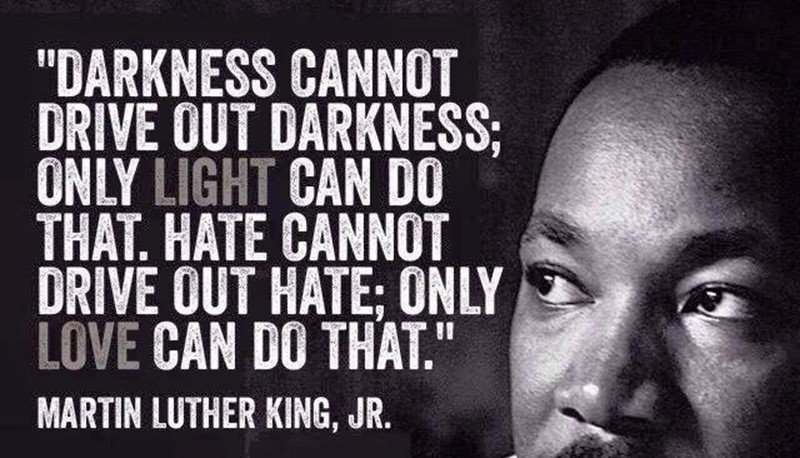
And why? Why did (do) we have to shine the light? It is true that the Bible reads, “In the same way, let your light shine before others, that they may see your good deeds and glorify your Father in heaven” (Matthew 5:16, NIV). But I tell you more practically, my grandmothers and the leaders of their generation were singing more practically. They were teaching and encouraging, saying to combat White Citizen’s Council policies, redlining, Jim Crow Laws, lynching, unlawful arrests, racial profiling, and other violations of African Americans (& People of Color) civil rights, we must let our light shine. They did GOOD when faced with EVIL, demonstrated LOVE when given HATE, and offered FORGIVENESS (not forgetfulness) when presented MEANNESS, OPPRESSION, and OFFENSE. The choir knew what the Rev. Dr. Martin Luther King, Jr. once said, “Darkness cannot drive out darkness, only light can do that. Hate cannot drive out hate, only love can do that.” Let’s choose to love today and every day, loving our neighbor (others) as we do ourselves (Mark 12:31, NIV). Love to all of you and thank you for your leadership Rev. Dr. Martin Luther King, Jr. May we continue to let our light shine!