Category: Mission-fulfillment

Overcoming Life’s Challenges with a Positive and Healthy Attitude | Encouragement from James 1: 2-4

Photo by Eric Sanman on Pexels.com

Life is a journey filled with twists, turns, and unexpected hurdles. As we traverse our own path, we encounter challenges that test our resilience, adaptability, and determination. These enduring challenges shape our character, help define our purpose, and propel us toward growth and development. Additionally, working through troubling circumstances helps to strengthen us emotionally, especially perhaps to endure greater responsibilities for the advancement of God’s kingdom. “Consider it pure joy, my brothers and sisters, whenever you face trials of many kinds, because you know that the testing of your faith produces perseverance. Let perseverance finish its work so that you may be mature and complete, not lacking anything” (New International Version Bible, 2024, James. 1: 2-4).

Very interesting encouragement from the epistle of James. What if James is suggesting within the sacred text that as we endeavor to work through adverse circumstances negatively impacting us, we should keep a positive and healthy posture when dealing with these issues or problems? Perhaps this seems like a tall order to endure trials and keep a positive and healthy attitude, kind of like climbing a tall mountain.

First we must choose to climb the mountain (decide to address the hardship). Next, we prepare to climb the mountain (Prepping mindset to climb, trusting Him as the source of our strength). Then we climb (working to overcome the problem, building our faith and confidence with each step we take). Finally, we reach the mountain peak (at the top, we have a new sense of ourselves and our faith through this accomplishment).

Although navigating the steep terrain of a mountain can be daunting, reaching the peak can strengthen our sense of purpose, relationships, health, productivity, etc. No matter the mountain(s) (i.e., hardship, obstacle, problem, barrier, etc.) we are facing in our lives, with a view from the mountaintop, we can look back and reflect on the journey up the mountain – allowing for learning and new strength to be applied to the next climb. We become a more complete version of ourselves to be more useful in fulfilling our kingdom purpose. Still, in the climb, we must remain positive and healthy, emotionally. In this way, we endure.

We work to maintain a positive and healthy emotional well-being as we face any struggle. This means managing emotions well and having a sense of meaning, purpose, and supportive relationships (CDC, n.d.). Managing our emotions well, especially when experiencing hardships, includes:

  • Identifying, processing, and expressing emotions in healthy ways.
  • Knowing how to deal with uncertainty, stress, and change.
  • Being able to work through disagreements.
  • Looking for solutions to problems in useful ways.
  • Asking others for help and support.

Efforts to be remain positive and healthy during stressful and tough times may not be easy. That is why it is important to keep your sight towards the peak (look up) and keep moving in a forward (advancing) direction. Continue to climb, working ourselves out of any valley (low place, low feeling). For more encouragement, we hope you will connect with us in the comments area of this blogpost or on Facebook. Also, we encourage connecting with a good church that positively and healthfully nurtures spiritual and emotional well-being.

References
Centers for Disease Control & Prevention. (n.d.). About Emotional Well-Being. https://www.cdc.gov/emotional-well-being/about/index.html

New International Version. (2024). YouVersion. https://www.bible.com/bible/111/PHP.4.13

New International Version. (2024). YouVersion. https://www.bible.com/bible/111/JAS.1.NIV

Taraji P. Henson is taking a stand to challenge mental health stigma

By Aamya Wilson | UAB Community Health & Human Services Intern

Taraji P. Henson is a beloved actor and veteran in the entertainment industry. She is best known for taking strong female leads that focus on the empowerment and strength of African American women. Though she is a very gifted actress, Taraji has also been a advocate for raising mental health awareness within the African American community. Mental illnesses can be experienced by many each year, with the National Institute for Mental Health (NIMH) reporting 57.8 million adults each year experience any mental illness (AMI) (NIMH, 2023). AMIs are characterized as a mental, behavioral, or emotional disorder and can range from causing no impairment to daily functioning to mild, moderate, and severe impairment (NIMH, 2023).

The percentage of African Americans experiencing AMIs annually is 21.4% or roughly one (1) of out every five (5) African American adults (NIMH, 2023). However, it may seem that challenges in mental health are not discussed within our communities. Not discussing mental illness may be even more detrimental to our health, especially because African Americans have experienced more forms of historical oppression, racism, dehumanization, and race-based violence than other people groups in the United States (SAMHSA, n.d.). Additionally, adverse experiences and negative encounters in the health care system can cause mistrust among African Americans for health care professionals (SAMHSA, n.d.). 

Stigma in discussing mental health challenges and overcoming negative encounters accessing health care is one of several reasons Ms. Henson has established an initiative within her community to create Wellness Pods. In 2018, Taraji, created the Boris Lawrence Henson Foundation in honor of her Veteran father who struggled with his mental health after his time in war. Her foundation was created to battle the stigma against mental health in the Black community and she does this with the He, She, and They Care Wellness Pods initiative within HBCUs. Recently created was the She Care Wellness Pod that is used as a healthy and safe space for Black women who may be feeling overwhelmed, stressed, or depressed.

Taraji has long been an advocate for mental health and therapy for the Black community and she has expressed her own battle with mental health on many different occasions. She even told Entertainment Tonight about her suicide ideation back in 2020. This is one example of many that shows anyone can be affected by mental health and we should show love and support to those within our sphere of influence when something is just “not right.” To help improve your mental health and the health of well-being of those around you, the WWL encourages the following (Tartakovsky, 2022):

  • Getting enough sleep (generally 7 – 9 hours nightly)
  • Spending less time engaged with social media
  • Strengthening your relationships with those are supportive of you
  • Staying active with exercise most days (generally 30 minutes daily)
  • Drinking plenty of water (8+ cups daily)
  • Knowing when to relax, de-stress, and seek help (overcoming previous experiences and advocating for yourself and loved ones)
  • Going outside for sunlight and fresh air

Let’s all work to prevent mental illnesses and build mental resilience by following general health and wellness tips offered by trusted sources. Additionally, it is “OK” and normal to need the help and support of positive and healthy people in your network. As the good song says,…”we all need somebody to lean on.” Finally, seek the support of professionals and if in crisis, use the 988 Suicide & Crisis Lifeline.

Resources

NIMH. (2023, March). Mental Illness. https://www.nimh.nih.gov/health/statistics/mental-illness#part_2540

SAMHSA. (n.d.). Black/African american. SAMHSA. https://www.samhsa.gov/behavioral-health-equity/black-african-american

Tartakovsky, M. (2022, May 2). 8 daily habits for Improved Mental Health. Healthline. https://www.healthline.com/health/mental-health/habits-to-improve-mental-health#sleep

Michael Leon- From Ghana to Michigan

Angela Wilson | Intern UAB School of Education | CHHS

Photo by Asiama Junior on Pexels.

Michael Leon is a 22-year-old extraordinary athlete at the prestigious Ivy League University of Michigan. He has achieved impeccable stats while participating in the University of Michigan Men’s soccer program.  As a freshman, he started in 3 of the 12 games he played in and achieved a season -high 74 minutes at Oakland. His sophomore year would be equally impressive as he managed to log 84 minutes on the pitch shortly after recovering from a back injury. He has won Allstate and first-team All-star several times and has traveled internationally for training with youth academies. With such a stellar athletic resume, he has a promising future with encouraging prospects.  But this modest athlete is not only thinking about how he can make the future better for himself but also wants to make things better for others.

Michael Leon comes from humble beginnings. He was born and raised in Accra, Ghana, and has dreamed of being an athlete ever since he was ten. His love, tenacity, and passion for soccer helped to propel him from his native land to broader horizons. He played ball in Europe and subsequently moved to America to further his education and dreams.  After attending The Hotchkiss School in Connecticut and becoming one of the region’s top soccer players, Michael Leon committed to The University of Michigan, where he continues to deliver dynamic performances on and off the soccer field.

Remembering his earlier life in Ghana, Michael Leon is determined to make a difference.  He established the Michael Leon Project and partnered with The Uniform Funding Foundation (TUFF) to help provide equipment and uniforms to youths in Ghana.  Adam Shibley, the founder of TUFF, created the non-profit organization to help underserved youth sports teams acquire sports gear. Michael Leon approached him with the idea of providing these items to children in his homeland.  Earlier this year, Michael Leon and Adam Shibley traveled to Ghana and hand -delivered sports equipment to children at Israel Park in Ghana.  Michael Leon is not just a stand-out athlete. He is a compassionate human being who wants to be a role model for his community and provide children with the inspiration and motivation they need to chase their dreams.  Although Michael Leon is still pursuing his degree at the University of Michigan, it is almost certain that he will achieve more academic, professional, and philanthropic accomplishments.

References

Sigal, Jonathan. (2019). Recruiting: Hotchkiss Forward Michael Leon Commits to Michigan. https://www.nesoccerjournal.com.

The Uniform Funding Foundation. (2018). https://gettuff.org

Reflecting on purpose when choosing close friends

By Larrell L. Wilkinson | PHAME-US Campaign

Photo by Mauru00edcio Mascaro on Pexels.com

It has been said, “birds of a feather flock together.” I heard the wise saying growing up, especially in my teen years. I would see the saying on inspirational posters or hear it from family members and/or church leaders…particularly when being encouraged to stay away from individuals that may have been troublemakers. As the admonishment would go, “avoid hanging out with (insert first name) person, else you may end up in trouble like them. Remember, “birds of a feather flock together.” I know it seems so cliché, but coming back around to this quote many years later, I will acknowledge that the friends we have around us, particularly our closest friends, will more than likely influence the direction of our life. Our closest friends are likely a significant ingredient in our life’s recipe for successfully accomplishing our goals. So then questions arise like, “what goals do I have for my life” and “how should I determine who I let into my closest friend circle?

I recently had the opportunity to reflect on the process of choosing people in support of living out purpose while listening to the Bible. In Acts of the Apostles 1:12-21 (NLT), the apostles are meeting to chose another person to become a witness with them to the resurrection of Jesus. The apostles were looking for a person who would be trusted with leading in the Gospel and joining them in the innermost circle of the work to be done. Much like friends with different life experiences, the apostle’s relationships were lets say,…very human. And when it came to choosing from among people in their network, Acts of the Apostles 1:24 suggests that the men “prayed” about the hearts of the men to join them in the inner workings of the ministry. Hmmm, praying about who I should let into my closest network of people to join me in my most important works of life. Outside of my wife, I hadn’t much thought of that.

When it comes to making friends, we are told to associate higher (associating with people in a higher social status than your current position), choose friends with similar values and/or goals to your own, or choose friends that balance your strengths/weaknesses. All of this is good advice. Additionally, let’s acknowledge that in order for us and our flock to soar towards our purpose in life, it doesn’t hurt to pray about and for the people coming into or already in our lives. Perhaps we should consider talking through (vetting) and praying with trusted people already in our lives about individuals who may join our circle? Sound too intrusive? Sound too clique’ish? What if being intentional about the type of individuals joining us on our life’s journey and mission was a key ingredient to our success? I get it. Honestly, it feels a little uncomfortable to type. However, as I travel along the lifecourse, I’ve had many good and not so good experiences.

The best contributors to my continued evolution in life have been the ones that I know God has blessed me with encountering. God has placed a great variety of people from many different backgrounds and experiences in my life to help me along the way. Sometimes I prayed and the person came, other times I met the person through a program, in school, through work, etc. and later recognized that God sent them. Overall, we seldom go wrong when we have around us, people who are positive individuals, supportive of overall health, seeking to live out a positive purpose, and willing to work as a support with you and others toward common positive goals. We’ll show love to many people and will likely have a network of people around us. There are a lot of people out there from which to choose our closest friends, so in deciding, let’s choose to be intentional and consider the power of prayer as well. It doesn’t hurt and furthermore, the intentionality and prayer may be the difference in making decisions that have lasting benefit to our lives.

A Gallon a Day, Helps Beyoncé to SLAY!

Amanda Benko | Intern UAB School of Education – CHHS

Image Source: Getty / Kevin Winter/BET

Staying Hydrated – Why is it important to drink enough H20

Beyoncé says, “I try to take care of myself, drinking at least a gallon of water with lemon a day” (Cut, 2016). Did you know that water makes up most of your body weight and involves several vital functions, including removing waste from the body, regulating your body temperature, and helping with brain function? It is essential to note that water plays an important part in our body’s functioning. According to the CDC, getting enough water daily is necessary for your health. Drinking water daily can help you stay hydrated (CDC, 2022). It can also help regulate body temperature, help keep our joints lubricated, prevent infections, deliver nutrients to cells, and ensure that organs function properly. Being well-hydrated can help you improve the quality of your sleep, mood, and cognition. According to experts, one should drink approximately 11 cups of water daily for an average woman and around 16 cups for men. Water plays a vital role in various body functions, such as the digestion of food, absorption, circulation, and excretion (Aschwanden, 2021). Research has shown that drinking plenty of water helps transport nutrients, oxygen, and hormones across the body.

Drinking plenty of water also helps in the hydration of cells and tissues. Our bodies are composed mainly of water. Every cell, tissue, and organ depends on water for proper functioning. Proper hydration can help you maintain the balance of fluids within the body, enabling you to maintain optimal energy levels, enhance concentration, and improve one’s overall productivity. Studies also reiterate that drinking plenty of water is good for skin health. It can help keep your skin hydrated and moisturized, reducing the risk of dryness, wrinkles, and disorders affecting the skin. This helps promote a healthy complexion, possibly contributing to a more youthful experience.

In conclusion, water is essential to almost every part of your body. Drinking the recommended daily amount of water will help you maintain your current state of health and improve your overall health. If you are exercising or living in hotter regions, it is essential to increase your water intake to avoid dehydration. What steps do you find helpful to keep hydrated?

References:

Aschwanden, C. (2021, September 17). How much water do you actually need?. The New York Times. https://www.nytimes.com/2021/09/17/well/live/how-much-water-should-I-drink.html

Centers for Disease Control and Prevention. (2022, June 6). Water and healthier drinks. Centers for Disease Control and Prevention. https://www.cdc.gov/healthyweight/healthy_eating/water-and-healthier-drinks.html

Cut, T. (2016, January 14). 33 celebrities on drinking water. Forbes. https://www.forbes.com/sites/thecut/2016/01/12/33-celebrities-on-drinking-water/?sh=22035d557d3d

Stay hydrated for Healthier Living. (2014). Nursing Standard, 28(47), 13–13. https://doi.org/10.7748/ns.28.47.13.s12

Supporting HBCUs to overcome historic underfunding

By Terrie Johnson | UAB Community Health & Human Services Intern

Photo by Ron Lach on Pexels.com

Historically Black Colleges and Universities (HBCUs) have a history in the United States of being underfunded due to varied underlying factors. One of the reasons may the history of systematic inequities. In other words, the discriminatory practices prevalent during the history of the United States, may still impact Black institutions today. Throughout the history of HBCUs, the principal mission has been to education the African American population. Since HBCUs have been tied to the Black population, they are often on the receiving end concerning limited funds allocation (Bagasra et al., 2022). Over time, this issue has caused chronic state underinvestment in HBCUs. Thus, such institutions continue to suffer from a lack of critical funds to run operations.

Additionally, lower alumni contribution is a factor in the continued underfunding of HBCUs. However, this issue is also linked to the socioeconomic position of many African-Americans within the United States. For example, most HBCU alumni earn less when compared to their White college graduate counterparts (Bagasra et al., 2022). This situation creates a gap in the level of contributions that Black alumni from HBCUs can make to advance the institutions. The amount of Black wealth in the United States is comparatively lower. As such, it cannot provide the needed funding to advance the functionality of HBCUs. The current situation in the country, whereby Blacks have limited economic opportunities, further perpetuates the financial circumstances of HBCUs (Bagasra et al., 2022).

Despite the financial pressures experienced by many HBCUs, can be increased through the adoption of critical best practices. For example, a public-private partnership can be encouraged to increase funding sources for institutions. The creation of greater awareness regarding this initiative will advance contributions toward the improvement of HBCUs (Jones et al., 2017). Moreover, greater advocacy for equity at the state and federal level can lead to changes in policies that provide greater support to HBCUs. Improved educational experiences may lead to advancements in African-American capital, which in turn would allow for alumni to give back to their HBCUs. This is why all African Americans should consider contacting (i.e., tweet, email, letters, phone calls, etc.) their state and federal representative and government leaders advocate for more HBCU funding. Check out this link for the United Negro College Fund (UNCF) to learn more and advocate. Share your advocacy story with us in the comments section or on Facebook.

References

Bagasra, A., McLetchie, A., & Wesley, J. (eds.). (2022). Contributions of historically black colleges and universities in the 21st century. IGI Global.

Jones, T., Jones, S., Elliot, K., Owens, L., Assalone, A., & Gándara, D. (2017). Outcomes based funding and race in higher education: Can equity be bought? Springer.

Non-profit Makes Veterans Wishes Come True

By Tan Walker | Community Health & Human Services Intern

Army veteran, Chris Kind was left with a brain injury after a terrifying blast in Iraq. Unfortunately, his brain injury later led him to become diagnosed with post traumatic stress disorder. “It was just hard adjusting to that, you know, to that new norm,” Kind expressed to CBS News after returning home.

Post traumatic stress disorder develops in some people who have experienced a shocking, scary, or dangerous event. Fear triggers many split-second changes in the body to help defend against danger. The “flight or flight” response is a normal reaction meant to protect people from harm (NIH, 2023).

Although recreating the life that he knew was tough, the father of five found joy again through gardening. However, the severe burns on his body prevented him from being exposed to direct sunlight.

That’s when Hope for the Warriors- a nonprofit organization that offers assistance to veterans- came to the rescue and gifted Kind a $10,000 greenhouse as a thank you for his service (Home: Hope for the warriors 2022). This organization has granted veterans over 250 wishes, ranging from woodworking equipment to family vacations . The CEO of Hope For The Warriors described this experience as “life changing”. 

Now, Kind can enjoy his gardening without fear and use his skills to bring others joy as well.

References

Home: Hope for the warriors. Hope for the Warriors | Restoring: Self, Family, Hope. (2022, December 15). Retrieved January 18, 2023, from https://www.hopeforthewarriors.org/

Shamlian, J. (2023, January 18). Nonprofit helps fulfill wishes for wounded veterans. CBS News. Retrieved January 18, 2023, from https://www.cbsnews.com/news/hope-for-the-warriors-wounded-veterans-wishes/

U.S. Department of Health and Human Services. (n.d.). Post-traumatic stress disorder. National Institute of Mental Health. Retrieved January 18, 2023, from https://www.nimh.nih.gov/health/topics/post-traumatic-stress-disorder-ptsd

What Do I Do Now?: Overcoming Stagnancy in Life

By Tan Walker|UAB Community Health and Human Services Intern

Photo by Luca Nardone on Pexels.com

There are times in life when we feel like we are excelling and accomplishing our goals. There are also times where we feel stagnant, and our lives have come to a complete halt. Believe it or not, it is quite common for us to sometimes feel uninspired and unmotivated to complete certain tasks or become a victim of procrastination. This can feel like a never-ending cycle of feeling like we’re on top of the world and drowning all at once. Here are some signs that you are stagnating:

  • If you are experiencing chronic procrastination on your goals and aspirations
  • If you’re not in the mood to do anything
  • If you rely on sleep, eating, and other activities for entertainment and comfort
  • If you know you should be doing something, but you keep avoiding it
  • If you have not achieved anything new in the last few months
  • If you feel like you are not reaching your potential

Trying to face stagnation in life can be a sign of a deeper problem. It is important to not eat yourself up over it and focus on overcoming this feeling. These few steps can help you gain the momentum you need to help you get back on track: 

Realize that you aren’t alone- Everyone feels stagnant at some point or another. You are not alone, and it is completely normal.

Find things that inspire you- Set goals for yourself and believe that there are no limitations for yourself.

Give yourself a break- Normalize taking breaks for yourself. Taking 3-6 months to rewind and regroup can be very beneficial.

Change your daily routines- It’s okay to change things around. Doing the same things over and over again can sometimes make us stagnant.

Make a small step- It is important to take action towards the goals that you set. Don’t be afraid of the unknown, or worry about being a perfectionist. Take things one day at a time!

Always remember that everything starts with us. We are responsible for what we choose to do within our lives and how we feel about certain things. Don’t let stagnation define you!Celestine ChuaCelestine is the Founder of Personal Excellence where she shares her best advice on how to boost productivity and achieve excellence in life. Read full profile by following the link below.

Chua, C. (2020, January 21). 5 steps to move out of stagnancy in life. Lifehack. Retrieved November 7, 2022, from https://www.lifehack.org/articles/featured/5-steps-to-move-out-of-stagnancy-in-life.html

Gardening Is My Mental Health Therapy

By Reginia Dodson | UAB Community Health and Human Services Intern

Photo by Alexander Grey on Pexels.com

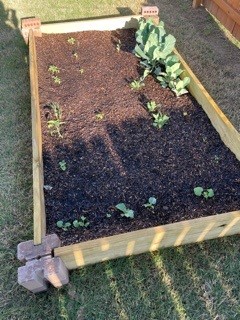
I planted a vegetable garden. At the time, I had no idea that it would prove to be therapeutic for me. It is only a small, raised bed garden that I somehow have planted to an overflowing capacity. This makes for a battle to keep my squash, zucchini, and eggplant from taking over the entire little box. Along with these aggressive space invaders, I planted tomatoes, okra, and cabbage as well. I even think that it is quite possible that I created an entirely new vegetable due to the overcrowding and plants mixing together. OK, I am joking, but still…there is joy in planting this garden.

When I began gardening, I did not realize that it would become my place and time to disengage from all the stressors in my life. Each day as I tackle the invaders growing and the natural intruders, I find myself relaxing and calming my anxieties. It is something to feel the cool soil as I dig around with my bare hands. I feel a connection with nature each day that I am in my garden.

I am not the only one who feels this way. Rooftop gardening, yes…on the roof, has been associated with better personal development and suggested enhanced physical and emotional well-being, sense of purpose, social inclusion, interpersonal relations, and quality of life (Triguero-Mas et al, 2020). What happens on the roof, happens on ground as well. I am always in my garden early in the morning before the world around me awakens. It is so serene and peaceful. I find even my breathing is more relaxed and the time helps to prepare me for the stressors I will encounter during the day. Furthermore, there are times that my family and friends get to enjoy the garden as we come together, supporting my happy pursuits with some good work and fun. Not to mention, good food afterwards.

It is also delightful to find what has grown seemingly overnight. I see it as a life metaphor, patiently waiting to see the work of my hands and nature come together to bring life into the world. I laugh at times because I never saw myself gardening. Especially, using my bare hands while doing so…oh the dirt and grime. So what about you? Do you have a garden? Are you good with plants? Do you find peace and delight working with nature? Leave your comments below.

References

Suggested citation for this article: Triguero-Mas M, Anguelovski I, Cirac-Claveras J, Connolly J, Vazquez A, Urgell-Plaza F, et al. Quality of Life Benefits of Urban Rooftop Gardening for People With Intellectual Disabilities or Mental Health Disorders. Prev Chronic Dis 2020;17:200087. DOI: http://dx.doi.org/10.5888/pcd17.200087external icon

Journaling Can Benefit Your Mental Health

By Tan Walker | UAB Community Health & Human Services Intern

Photo by Negative Space on Pexels.com

When you think of “journaling”, it is easy to picture a young girl locked away in her room writing about her high-school crush in a diary with a lock on it. Although this is an easy perception to have, it likely matches with the overall consensus for adults: journaling is for young people still trying to figure out their purpose in life and gossiping about the latest high school drama.

Believe it or not, many adults own a journal of some sort. Whether it’s a diary, a 3 subject notebook, notes taken on a smartphone, or just a plain sheet of paper and a pen: journaling has no required format. Journaling only requires that you share your thoughts openly. Effective journaling can help you meet your goals or improve your quality of life (Ackerman, 2022; Purcell, 2006). Although personal goals vary from person to person, they are almost always positive and journaling can be a process that support goal accomplishment.

Effective journaling can help you clear your head, reduce anxiety, and it can also help you connect your thoughts, feelings, emotions, and behaviors. But how exactly does dumping words on a page have an impact on your mental health?

Well, journaling has been proven to help people struggling with a mental illness or people who want to improve their mental health (Ackerman, 2022; Purcell, 2006). More specifically, effective journaling has been found to:

Boost your mood
Enhance your sense of well-being
Reduce symptoms of depression
Reduce symptoms of trauma and PTSD
Improve your work memory

Here are some following tips to ensure your journaling is effective:

Write in a space free of distractions
Journal at least once a day
Keep your journal private -“my eyes only”
Be in control of the topic and structure of your writing

Try journaling today! The process may take some time, but the benefits can support your health and quality of life. It can be fun! Whether you choose to write about how your day went or your current thoughts and emotions, the fun part is that you get to choose what your narrative will be!

Courtney E. Ackerman, M. A. (2022, September 8). 83 benefits of journaling for depression, anxiety, and stress. PositivePsychology.com. Retrieved September 8, 2022, from https://positivepsychology.com/benefits-of-journaling/

Purcell, M. (2006). The Health Benefits of Journaling. Psych Central. Retrieved on October 10, 2022, from http://psychcentral.com/lib/the-health-benefits-of-journaling/000721