Category: Positive

Dear Black Girl & Dear Black Boy: Interview with author Dr. Cheri Langley

By Angela Wilson | UAB Community Health & Human Services Intern

Photo by Jairo David Arboleda on Pexels.com

I had the privilege of interviewing the author of Dear Black Girl and Dear Black Boy.  Dr. Cheri N. Langley wrote these books that brings visibility, perspective, and awareness to some of the issues that impact African American boys and girls.  These short, colorful poems help children process some of the racial tensions that they are facing in society.  Dr, Langley further acknowledges that being a black boy in America can carry anxiety and she offers advice on how to engage with law enforcement that could possibly save lives.

In Dear Black Girl, Dr. Langley approaches the issues of racism, sexism, and misogynistic stereotypes experienced by young African American girls. This literature is to invoke conversation and facilitate a healthy dialogue between young black girls and their parents and caregivers.  The language in both books is in poetry form with pictures that are captivating. Dr. Langley does an outstanding job with describing the life of young African American children and commanding their attention to these stories. Her dedication is inscribed at the beginning of the story where she assures her audience that they are loved, and their voices are heard. She brilliantly puts discussion questions at the end of the books that parents can use to help their children understand the contents and purpose. These books serve to bring truth, facts, and compassion to African American children who may not have a voice. Dr. Langley feels that it is important for children of other races to read the book so they can see the lives of their African American peers through their lens.

Dr. Cheryl Langley’s inspiration for Dear Black Boy came from watching the video of George Floyd. Being the mother of two black sons, she said she could not just “look away” from such a horrific incident and felt the need to write to reach little black boys who may be crying out for help.  Dr. Langley is an advocate for underserved and minority populations and has been heavily involved with research involving HIV and AIDS, and sexually transmitted infections awareness and prevention.  She uses her background in behavioral sciences and her work through novels and poems to help facilitate her journey to create positive change, protest injustices, and increase dialogue regarding systemic inequality.  

If you are interested in purchasing either of these works, please check out: https://www.amazon.com/stores/Dr.%20Cheri%20N%20Langley/author/B097QQL3RW

References:

Langley, C. (2023). Dear Black Boy. Dear Black Girl. Langleyresearch.org

The History Behind Carrie A. Tuggle Elementary School

Angela Wilson | Intern UAB School of Education | CHHS

Photo: Instagram | #carrieatuggleelementaryschool

The History Behind Tuggle Elementary School

Tuggle Elementary School is located in Birmingham, Alabama and has approximately 472 students from Pre-Kindergarten to fifth grade. Although it has been affiliated with The Birmingham City School System since 1926, many natives of Birmingham are oblivious to the remarkable history embedded in its name.

Tuggle Elementary School is named after Carrie A. Tuggle, a fierce innovator whose trailblazing efforts are still visible today.  She was born in 1858 in Eufaula, Alabama and subsequently married John Tuggle and had four children.  The couple eventually moved to Birmingham in search of better job opportunities.

Mrs. Tuggle excelled in education, social work, and religion, and found her calling when she began working with delinquent boys as a welfare officer.  After speaking on behalf of boys as young as ten years old, she was inspired to provide housing accommodations for orphaned black children.  She initially took them into her home, until she was able to open a single-building school in September 1903. Named The Tuggle Institute this facility allowed black, destitute orphans and juveniles to receive an education. She also used her courtroom experience to help create The Jefferson County Juvenile and Domestic Court. 

The Tuggle Institute garnered praise from the citizens of Birmingham and was noted for its substantial contributions to the advancement of black people.  Some outstanding alumni who credit Mrs. Tuggle for her influence include Dr. A. G. Gaston, John T. Wheatley, and Erskine Hawkins, to name a few. The Tuggle Institute became affiliated with the Birmingham City Public Schools in 1926. In 1936, The Board of Education named it the Carrie A. Tuggle Elementary School.

Carrie A. Tuggle died in November 1954 and is buried on the school’s ground. There is memorial plaque with these words inscribed: “Carrie A. Tuggle, a scholar, educator, and servant of mankind.” To learn more about Mrs. Tuggle and Carrie A. Tuggle Elementary School, check out https://alafricanamerican.com/beyond-the-book-honoree-archives/beyond-the-book-carrie-tuggle/

References:

Alabama Women’s Hall of Fame. Carrie A. Tuggle. http://www.awhf.org.

Beyond the book – Carrie A. Tuggle – Alabama African American history. Alabama African American History – sponsored by AT&T. (2022, January 14). https://alafricanamerican.com/beyond-the-book-honoree-archives/beyond-the-book-carrie-tuggle/

Lizzo Is PHAT and Fed Up! Is There Any Kindness on Social Media?

Angela Wilson | Intern UAB School of Education | CHHS

Photo by Pixabay on Pexels.com

Is There Any Kindness on Social Media?

Melissa Viviane Jefferson, also known as Lizzo, is a talented singer, songwriter, rapper, and actress.  She is a trained flutist and has cemented herself in history by playing a crystal flute that President James Madison once owned at a concert in Washington, D.C.  She has won four Grammy Awards, two Soul Train Awards, and a Billboard Music Award.  With over 13 million Instagram followers, there is no denying that Lizzo is a hip- hop and cultural icon. But with all her wealth, success, and fans, Lizzo is ready to call it a quits.  She admits to being fat and she (usually) proudly displays her body in skimpy, revealing outfits, but not without social media trolls reminding her that she is overweight.

One would think that having a voice and stage presence as large as Lizzo’s, she would be somewhat shielded from mean spirited people who seem to get joy from name calling. Unfortunately, this is not the case.  Lizzo is constantly fat shamed because of her body.  She posted to her Twitter account (in part), that she was close to giving up and quitting because of all the name-calling she receives.  She concluded that the love she receives does not outweigh the hate.  So here we are (seemingly) on the cusp of losing one of the most influential hip-hop icons of our time, all because of a lack of kindness and compassion from the social media community.

Lizzo’s experience is just a small sample of a larger issue that is impacting millions of Americans. As our world leans more toward innovative technology and digitalization, we are seeing an increase in people being targeted by online bullying and offensive name-calling.  According to The Pew Research Center (Vogels, 2021), 41% of adults have experienced online harassment, and women are more likely than men to be victims.  While some perpetrators perceive cyberbullying as harmless fun, the effects of cyberbullying are serious. Victims of online bullying may experience feelings of distress, increased feelings of mood swings and depression, insomnia, low self-esteem, and even suicide.   So, while Lizzo’s platform brings visibility to this ongoing issue, there is a significant amount of work to be done to help alleviate it, and that work starts with each of us. As social media users, we need to get involved and actively promote a safe, supportive, and welcoming online environment for people being bullied.  There are no bystanders when it comes to cyberbullying and harassment. So, the next time you are on Facebook, Instagram, or any other social media platform, and you see someone being cyber-bullied, will you interject with kindness and be a part of the solution, or be a part of the problem?

References

Cuncic, A. (2022). Verywellmind. The Psychollogy of Cyberbullying. https://www.verymind.com.

Vogels. E. (2021). Pew Research. The State of Online Harassment. www.pewresearch.org.  

Michael Leon- From Ghana to Michigan

Angela Wilson | Intern UAB School of Education | CHHS

Photo by Asiama Junior on Pexels.

Michael Leon is a 22-year-old extraordinary athlete at the prestigious Ivy League University of Michigan. He has achieved impeccable stats while participating in the University of Michigan Men’s soccer program.  As a freshman, he started in 3 of the 12 games he played in and achieved a season -high 74 minutes at Oakland. His sophomore year would be equally impressive as he managed to log 84 minutes on the pitch shortly after recovering from a back injury. He has won Allstate and first-team All-star several times and has traveled internationally for training with youth academies. With such a stellar athletic resume, he has a promising future with encouraging prospects.  But this modest athlete is not only thinking about how he can make the future better for himself but also wants to make things better for others.

Michael Leon comes from humble beginnings. He was born and raised in Accra, Ghana, and has dreamed of being an athlete ever since he was ten. His love, tenacity, and passion for soccer helped to propel him from his native land to broader horizons. He played ball in Europe and subsequently moved to America to further his education and dreams.  After attending The Hotchkiss School in Connecticut and becoming one of the region’s top soccer players, Michael Leon committed to The University of Michigan, where he continues to deliver dynamic performances on and off the soccer field.

Remembering his earlier life in Ghana, Michael Leon is determined to make a difference.  He established the Michael Leon Project and partnered with The Uniform Funding Foundation (TUFF) to help provide equipment and uniforms to youths in Ghana.  Adam Shibley, the founder of TUFF, created the non-profit organization to help underserved youth sports teams acquire sports gear. Michael Leon approached him with the idea of providing these items to children in his homeland.  Earlier this year, Michael Leon and Adam Shibley traveled to Ghana and hand -delivered sports equipment to children at Israel Park in Ghana.  Michael Leon is not just a stand-out athlete. He is a compassionate human being who wants to be a role model for his community and provide children with the inspiration and motivation they need to chase their dreams.  Although Michael Leon is still pursuing his degree at the University of Michigan, it is almost certain that he will achieve more academic, professional, and philanthropic accomplishments.

References

Sigal, Jonathan. (2019). Recruiting: Hotchkiss Forward Michael Leon Commits to Michigan. https://www.nesoccerjournal.com.

The Uniform Funding Foundation. (2018). https://gettuff.org

Reflecting on purpose when choosing close friends

By Larrell L. Wilkinson | PHAME-US Campaign

Photo by Mauru00edcio Mascaro on Pexels.com

It has been said, “birds of a feather flock together.” I heard the wise saying growing up, especially in my teen years. I would see the saying on inspirational posters or hear it from family members and/or church leaders…particularly when being encouraged to stay away from individuals that may have been troublemakers. As the admonishment would go, “avoid hanging out with (insert first name) person, else you may end up in trouble like them. Remember, “birds of a feather flock together.” I know it seems so cliché, but coming back around to this quote many years later, I will acknowledge that the friends we have around us, particularly our closest friends, will more than likely influence the direction of our life. Our closest friends are likely a significant ingredient in our life’s recipe for successfully accomplishing our goals. So then questions arise like, “what goals do I have for my life” and “how should I determine who I let into my closest friend circle?

I recently had the opportunity to reflect on the process of choosing people in support of living out purpose while listening to the Bible. In Acts of the Apostles 1:12-21 (NLT), the apostles are meeting to chose another person to become a witness with them to the resurrection of Jesus. The apostles were looking for a person who would be trusted with leading in the Gospel and joining them in the innermost circle of the work to be done. Much like friends with different life experiences, the apostle’s relationships were lets say,…very human. And when it came to choosing from among people in their network, Acts of the Apostles 1:24 suggests that the men “prayed” about the hearts of the men to join them in the inner workings of the ministry. Hmmm, praying about who I should let into my closest network of people to join me in my most important works of life. Outside of my wife, I hadn’t much thought of that.

When it comes to making friends, we are told to associate higher (associating with people in a higher social status than your current position), choose friends with similar values and/or goals to your own, or choose friends that balance your strengths/weaknesses. All of this is good advice. Additionally, let’s acknowledge that in order for us and our flock to soar towards our purpose in life, it doesn’t hurt to pray about and for the people coming into or already in our lives. Perhaps we should consider talking through (vetting) and praying with trusted people already in our lives about individuals who may join our circle? Sound too intrusive? Sound too clique’ish? What if being intentional about the type of individuals joining us on our life’s journey and mission was a key ingredient to our success? I get it. Honestly, it feels a little uncomfortable to type. However, as I travel along the lifecourse, I’ve had many good and not so good experiences.

The best contributors to my continued evolution in life have been the ones that I know God has blessed me with encountering. God has placed a great variety of people from many different backgrounds and experiences in my life to help me along the way. Sometimes I prayed and the person came, other times I met the person through a program, in school, through work, etc. and later recognized that God sent them. Overall, we seldom go wrong when we have around us, people who are positive individuals, supportive of overall health, seeking to live out a positive purpose, and willing to work as a support with you and others toward common positive goals. We’ll show love to many people and will likely have a network of people around us. There are a lot of people out there from which to choose our closest friends, so in deciding, let’s choose to be intentional and consider the power of prayer as well. It doesn’t hurt and furthermore, the intentionality and prayer may be the difference in making decisions that have lasting benefit to our lives.

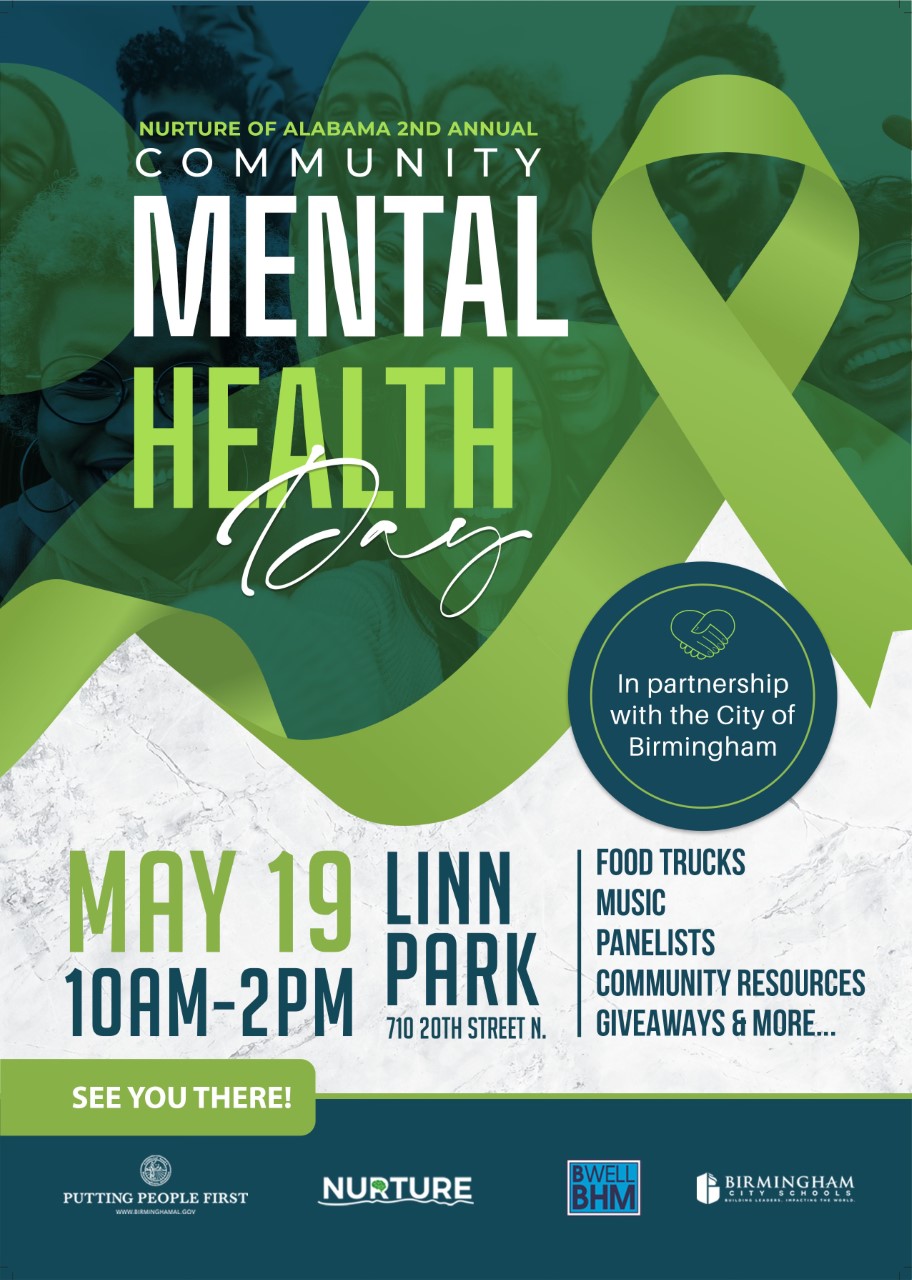
The City of Birmingham 2nd Annual Mental Health Day

By The PHAME-US Campaign

Join the PHAME-US.com and Wilkinson Wellness Lab team at this community event sponsored by Nuture, LLC, the City of Birmingham, AL and Birmingham City Schools. The event is free and open to the public.

Nurture of Alabama believes Birmingham can thrive, especially if communities address the mental health crisis experienced in our neighborhoods. Through the event Friday, May 19th, Nurture’s goals are to: 1) remove the stigma of mental health support, 2) improve mental health services accessibility, and 3) provide community education on mental health & wellness.

The event will have chair massages, a licensed professional counselor providing depression screenings, speakers,  free resources, giveaways, local food trucks,  yoga sessions, line dancing, blood pressure checks and more. So come out, have a good time, and let’s engage in mental wellness!

Stand up more and improve your health!

By Dr. Larrell L. Wilkinson | PHAME-US Campaign

What’s up? Are you? Yes, we are starting the post with a little humor in hopes that you will STAND UP! A study from a group of scientists at the University of Pittsburgh showed that on average, a person burned 8 more calories standing versus sitting at work (Creasy, Rogers, Byard, Kowalsky, & Jakicic, 2016). This may not sound like a lot, but if standing half the time during an 8 hour workday, after one week a person will have burned (used) 160 calories, about the standard serving size of Oreo cookies or Lay’s Classic Potato Chips. Again, this may not sound like a lot, but every little bit helps, Right?

Calories are how we measure energy and describes the energy we get from eating food and drinking. Calories don’t measure weight or length. Instead, we burn (use) calories when we exercise, walk, and perform regular movements throughout the day. Another way to burn calories is to simply, STAND. Also, there are other benefits to standing more during the day! Experts from the the Centers for Disease Control and Prevention (CDC) (Chosewood & Franklin, 2012) found that using sit-stand workstations did the following:

  • Standing more while at work decreases the amount of time spent in sedentary work
  • Standing more helps relieve pressure on the lower back, buttocks and legs, and may help reduce compression of the spine arising from long periods of sitting
  • Standing more may improve energy levels
  • Standing more frequently may improve cognition
  • Standing may increase circulation and lead to better blood flow to the brain and other organs
  • Standing more burns more calories than sitting
  • Standing more may assist with energy balance and aid in weight management
  • Standing more may improve bone density over time
  • Standing more may promote better sleep

So what about you? Are you standing more? Are you willing to TAKE A STAND and STAND UP? How will you stand more during the day? I can hear Ludacris’s song playing in my head…”When I Move, You Move.” So just LIKE THAT, let’s stand up and move together. Share your story about standing or the different ways you move here in the comments section and/or share with us on Facebook, Instagram, and Twitter.

References
Chosewood, L.C. & Franklin, C.C. (2012, December 5). NIOSH takes a stand. NIOSH Science Blog. https://blogs.cdc.gov/niosh-science-blog/2012/12/05/sit-stand/.

Creasy, S. A., Rogers, R. J., Byard, T. D., Kowalsky, R. J., & Jakicic, J. M. (2016). Energy Expenditure During Acute Periods of Sitting, Standing, and Walking. Journal of physical activity & health13(6), 573–578. https://doi.org/10.1123/jpah.2015-0419

Supporting HBCUs to overcome historic underfunding

By Terrie Johnson | UAB Community Health & Human Services Intern

Photo by Ron Lach on Pexels.com

Historically Black Colleges and Universities (HBCUs) have a history in the United States of being underfunded due to varied underlying factors. One of the reasons may the history of systematic inequities. In other words, the discriminatory practices prevalent during the history of the United States, may still impact Black institutions today. Throughout the history of HBCUs, the principal mission has been to education the African American population. Since HBCUs have been tied to the Black population, they are often on the receiving end concerning limited funds allocation (Bagasra et al., 2022). Over time, this issue has caused chronic state underinvestment in HBCUs. Thus, such institutions continue to suffer from a lack of critical funds to run operations.

Additionally, lower alumni contribution is a factor in the continued underfunding of HBCUs. However, this issue is also linked to the socioeconomic position of many African-Americans within the United States. For example, most HBCU alumni earn less when compared to their White college graduate counterparts (Bagasra et al., 2022). This situation creates a gap in the level of contributions that Black alumni from HBCUs can make to advance the institutions. The amount of Black wealth in the United States is comparatively lower. As such, it cannot provide the needed funding to advance the functionality of HBCUs. The current situation in the country, whereby Blacks have limited economic opportunities, further perpetuates the financial circumstances of HBCUs (Bagasra et al., 2022).

Despite the financial pressures experienced by many HBCUs, can be increased through the adoption of critical best practices. For example, a public-private partnership can be encouraged to increase funding sources for institutions. The creation of greater awareness regarding this initiative will advance contributions toward the improvement of HBCUs (Jones et al., 2017). Moreover, greater advocacy for equity at the state and federal level can lead to changes in policies that provide greater support to HBCUs. Improved educational experiences may lead to advancements in African-American capital, which in turn would allow for alumni to give back to their HBCUs. This is why all African Americans should consider contacting (i.e., tweet, email, letters, phone calls, etc.) their state and federal representative and government leaders advocate for more HBCU funding. Check out this link for the United Negro College Fund (UNCF) to learn more and advocate. Share your advocacy story with us in the comments section or on Facebook.

References

Bagasra, A., McLetchie, A., & Wesley, J. (eds.). (2022). Contributions of historically black colleges and universities in the 21st century. IGI Global.

Jones, T., Jones, S., Elliot, K., Owens, L., Assalone, A., & Gándara, D. (2017). Outcomes based funding and race in higher education: Can equity be bought? Springer.

Are We Really What We Eat?

By Angela Wilson | Community Health and Human Services Intern

I am sure we have all heard the phrase, “You are what you eat”, (Ludwig). But what does this phrase really mean? In short, it means that we must eat foods that benefit our bodies so that we can be healthy and fit. Heart disease, diabetes, and other cardiovascular diseases disproportionately affect the African American community so it is imperative that we examine the benefits of consuming certain fruits which may significantly lower our chances of getting these diseases. This commentary will address the health benefits of strawberries, blueberries, and raspberries.

         Strawberries are very rich in antioxidants and are an excellent source of vitamin C , manganese, folate, and potassium. Vitamin C strengthens the body’s defense and protects it from free radicals ( harmful molecules),  which has been linked to many chronic diseases. Manganese is an element that assists in building bones, wound healing, and reproductive health. Folate and Potassium are important for normal tissue growth, cell function, and essential bodily functions such as regulating blood pressure. Strawberries are 91% water and have a very low carb content. They also have a significant amount of fiber, (approximately 26%), which improves digestive health by feeding the friendly bacteria in your stomach. Lastly, evidence suggests that strawberries lowers the spike in blood sugar after consuming a meal, thereby aiding in blood sugar regulation.

        Blueberries contain some of the highest anti-oxidant levels which contribute to their ability to neutralize some of the free radicals that cause damage to your DNA. They also protect cholesterol in your blood from becoming damaged.  Bad cholesterol (LDL), increases your risk for heart disease and stroke. Blueberries are strongly linked to reduced levels of LDL, which makes them very good for your heart. Anthocyanin, one of the powerful antioxidants in blueberries has significant beneficial effects on insulin sensitivity and glucose metabolism.  This plays an instrumental role in reducing inflammation and aiding in the protection of conditions like cancer and diabetes.

        Raspberries are very low in sugar and are considered to be antioxidant powerhouses because of their high vitamin C content.  One 100-gram portion of raspberries provides 23 milligrams of vitamin C, which is approximately 30% of the recommended daily allowance for women.  They are associated with a lower risk of chronic stress related diseases such as heart disease and cancer. Raspberries support good digestive health due to their high fiber content and they also reduce the amount of insulin needed to manage blood sugar levels.

As you can see, these fruits are key components to good health and well being and should be incorporated into our diets as we strive to become healthier, stronger, and happier while protecting our bodies from chronic diseases and illnesses.

References:
Bjarnadottir, A. (March 2019). Strawberries 101: Nutrition Facts and Health Benefits. https://www.healthline.com. Retrieved February 27, 2023.
Ritcher, A. (January 2023). 10 Proven Health Benefits of Blueberries. https://www.healthline.com Retrieved February 27, 2023.
Sachdev, P. (September 2022). Health Benefits of Raspberries. https://www.webmd.com Retrieved February 27, 2023.

What is Shame and How Does It Affect Us?

By LaTangellia Walker | Community Health and Human Services Intern

Photo by Liza Summer on Pexels.com

Shame is a painful, self-critical emotion; A feeling of humiliation or distress caused by the consciousness of wrong or foolish behavior. When we feel shame, it is common to think of ourselves in a negative light. We begin to think that we are ugly, incompetent, or stupid (The psychology of shame, 2023). The moment we begin having these thoughts, we separate our true selves with an ideal image of who we aspire to be. Our ideal image is usually represented by a strong figure, not someone who drowns themselves in self-pity.

Shame is associated with many mental health disorders. The most common mental health disorder that shame is correlated with is suicide, which is often seen as a motive for suicidal behavior. In 2021, 47,646 people died by suicide (CDC, 2022). Suicide rates have been skyrocketing for years and there is evidence that social factors such as loniless, financial ruin and shame are more direct causes of this dramatic increase.

The most common questions we are asked in the United States are “What do you do?” or “Are you seeing anyone?” or “When are you going to have kids?” Oftentimes, when we are being asked these questions, we judge ourselves before anyone else gets a chance to. But what would happen if we let others judge us without judging ourselves? When we leave this world, we aren’t going to care what people say about us. 

So how can we learn let go of our shamefulness?

  • Admit when you feel shame and explore why.
  • Talk to someone you trust about what you are feeling.
  • Find compassion for yourself.
  • Remember that your opinion of yourself matters the most!

 We do not feel ashamed because of our actions, but because of who we are (The psychology of shame, 2023).

Centers for Disease Control and Prevention. (2022, September 30). Suicide increases in 2021 after two years of decline. Centers for Disease Control and Prevention. Retrieved March 9, 2023, from https://www.cdc.gov/nchs/pressroom/nchs_press_releases/2022/20220930.htm 

Sussex Publishers. (n.d.). The psychology of shame. Psychology Today. Retrieved March 9, 2023, from https://www.psychologytoday.com/us/blog/sonnet-freud/202009/the-psychology-shame