Tag: CDC

Former NBA star & champion Dwayne Wade raises awareness about Kidney Cancer

by Larrell L. Wilkinson, PHAME-US.com

Dwyane Wade, the celebrated NBA Hall of Famer, recently opened up about his battle with kidney cancer on Late Night with Jimmy Fallon. Wade shared that his diagnosis came after he turned 40 and decided to undergo a comprehensive health check-up. With a family history of cancer—his father and grandfather both battled prostate cancer—he wanted to be proactive about his health. In December 2023, Wade underwent a procedure to remove part of his kidney, which was later confirmed to be cancerous.

On the talk show known for its humor and funny comedic bits, Wade shared the importance of knowing your body and getting “checked out” by a doctor. During an emotional appearance on the talk show Jenna & Friends, Mr. Wade shared more regarding his health, challenges, and the symptoms that led him to speak to his doctor who recommended additional tests. He also gave credit to his wife, actress Gabrielle Union, and his children for their support during his recovery.

The Centers for Disease Control and Prevention (CDC) lists the following symptoms for kidney cancer, including:

  • Blood in the urine.
  • A lump or swelling in the kidney area or abdomen.
  • Lower back pain or pain in the side that doesn’t go away.
  • Feeling tired often.
  • Fever that keeps coming back.
  • Not feeling like eating.
  • Losing weight for no reason that you know of.
  • Something blocking your bowels.
  • A general feeling of poor health.

In 2024, the American Cancer Society (ACS) estimates that 14,390 people (9,450 men and 4,940 women) died from kidney cancer disease in 2024 and approximately 81,610 new cases of kidney cancer were diagnosed (American Cancer Society, n.d.). The CDC recommends several steps to lower the risk of kidney and renal pelvis cancers, including:

  • Maintain a healthy weight: Obesity is a risk factor, so staying active and eating a balanced diet can help.
  • Avoid smoking: Smoking increases the risk of kidney cancer, so quitting is highly beneficial.
  • Be cautious with certain chemicals: Especially trichloroethylene, which is used in some industrial jobs. Proper safety measures are essential if you’re exposed to it.

To learn more about Dwayne Wade and hear more about his life, perspectives on sports, fashion, music, and business, we can tune into his channel on YouTube, the WY Network. To learn more about kidney cancer, please visit the CDC web presence for kidney cancer and the American Cancer Society (ACS). To raise awareness and encourage others regarding their health journeys, please consider engaging with US on Facebook.

References
American Cancer Society. (n.d.). About Kidney Cancer. http://Www.cancer.org. Retrieved March 11, 2025, from https://www.cancer.org/cancer/types/kidney-cancer/about.html
CDC. (2024, April 25). Kidney Cancer Basics. Kidney Cancer. https://www.cdc.gov/kidney-cancer/about/index.html

Previous experiences may bias our perceptions, even as racial bias does exist

By Aamya Wilson | UAB Community Health & Human Services Intern

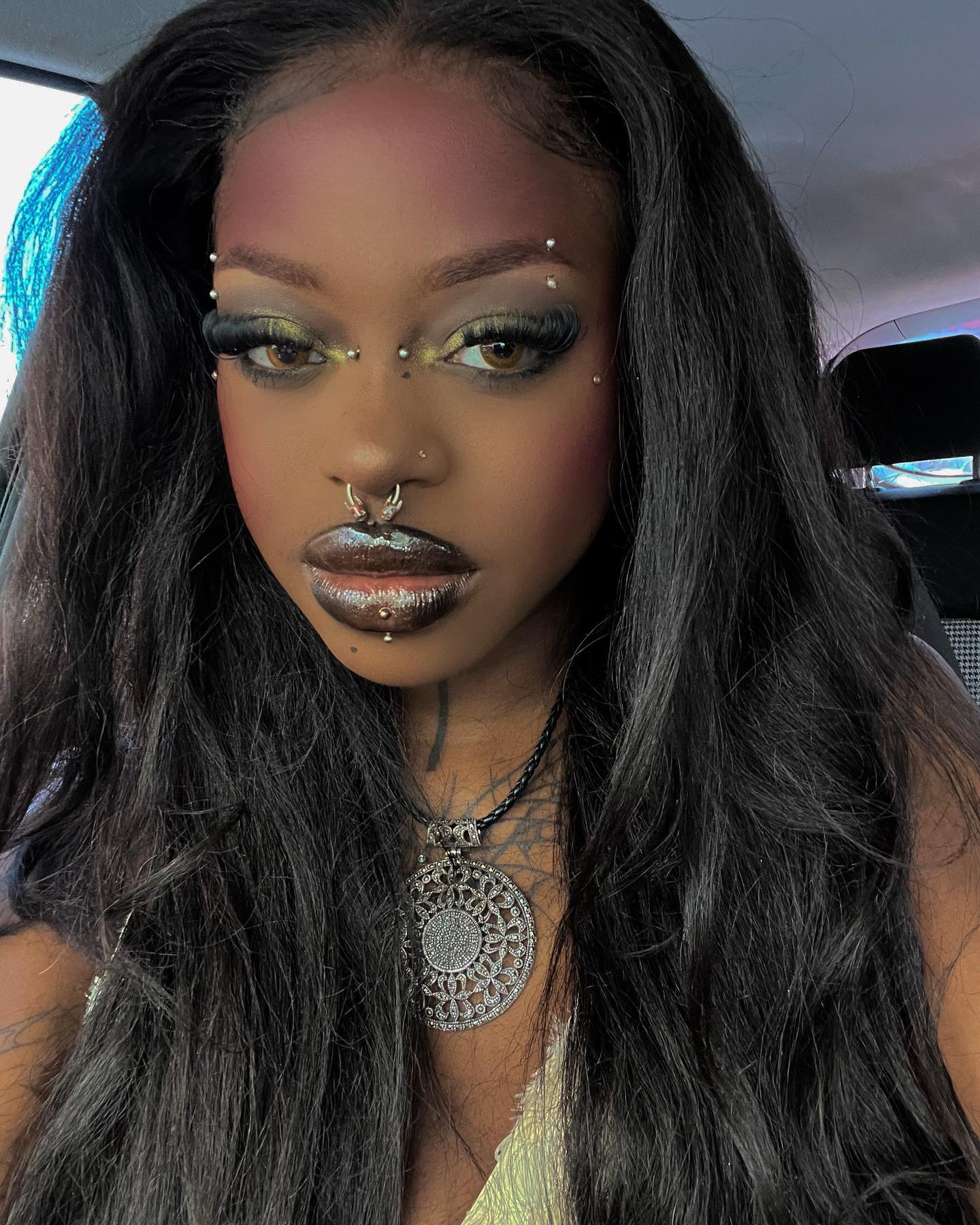
Our previous life experiences may influence the way we perceive the event we encounter daily. When we encounter past traumas, the effects can linger for a long time. Thusly, when aspiring musician Baby Storme experienced a process of protocols to prevent her from flash mobbing (i.e., shooting her video) in a Target, she may have and continue to view the incident through a lens filtered with previous racially biased experiences. Given the Target encounter shared over social media, Baby Storme sparked a firestorm of responses on the encounter with comments supporting her views that the incident is clouded in racism and others exclaiming that Target has a right to implement protocols preventing flash mobs and other activities on/in their premises.

Racism, according to the CDC, can be defined as a system that assigns value and determines opportunity based on the way people look or the color of their skin, which can unfairly advantage and disadvantage those within our societies (CDC, 2023). Some social media commenters claimed that Baby Storme played the “race card” and suggested “racism” was at hand in order to exploit the particular situation for gaining sympathy or advantage. Was the popular TikTok platform African American alternative pop music star using the history of racism in America as way to seek benefit or raise a level of support for her actions? Maybe. When she made allegations against Target for being racist by not letting her and her dancers perform within their establishment, she may have felt victimized due to her race as months earlier the artist experienced an incident where she feels she was racially profiled at a local Citibank branch when performing a transaction with a $30,000.00 check. According to her self-report on social media, the workers within that bank immediately confiscated her check and called the police on her during the process. Her emotional experience shared on social media offers insight to how the negative event made her feel. Taken into consideration, it may not be such a far reach to see how Baby Storme may have perceived the Target incident have been biased by race.

Let’s continue to be reasonable. Target is a public space for consumers and has a duty to keep their store safe and friendly for their customers. Target as a corporation is definitely within their rights to authorize their employees to implement protocols and practices to preserve store safety and be accessible for all customers. Thusly, it is OK for them to limit the actions of flash mobs, limiting public disturbances, no matter what time of night the flash mob occurs (i.e., near closing hours).

As social media has become the new outlet to express many negative encounters and discriminatory actions, we may do so without fostering understanding. True, a soundbite is not enough time to offer context and comprehensive truth. Still, if people have an aim for sharing experiences to foster understanding, then processes toward strengthening relationships among people from different backgrounds will provider greater solidarity within society. Because, racism and discrimination to continue to occur within American society. Perhaps with social media, people may believe these negative experiences happen more often than they do. That is why it is also important to remember the following:

  • Work to not dwell on negative or dark thoughts (i.e., I will not let this negative situation define me…)
  • Stop negative self-talk (i.e., I will work to find the humanity and beauty; I hope my offenders will be able to find the humanity and beauty of all people, etc.)
  • Reframe negative situations (i.e., Racial bias is real, but I am determined for people to know my character, value my culture,…)
  • Establish healthy patterns for yourself (i.e., engage in exercise, healthy eating, prayer, meditation, supportive relationships, etc.)
  • Embrace positive moments (i.e., reflect on the positive moments in your life)
  • of all people I hope that those offending me will be able to see the beauty of all people

What are your thoughts? How do you stay positive? How do you offer to others your experiences to support understanding among diverse people? Please share in the comments below and on Facebook, here.

Resources

CDC. (2023, August). Racism and health. Centers for Disease Control and Prevention. https://www.cdc.gov/minorityhealth/racism-disparities/index.html

Hitting the Hot 100, checking STD stats, checking your STD status

Angela Wilson | UAB Community Health & Human Services Intern

Sexyy Red is the latest Hip-Hop sensation and cultural phenomenon.  She cemented herself as a mainstream artist with her break-out hit “Pound Town” and partnered up with Niki Minaj on the certified Gold hit entitled “Pound Town 2″, debuting at No. 66 on the Billboard Hot 100. Unfiltered, the rapper’s lyrics may be considered a bit “raunchy” for some listeners. Still, she has fans, many fans, amassing over 1.7 million followers on Instagram and is currently the opening act for mega-entertainer and rapper, Drake.  Often dawning pierced lips, eccentric hairstyles, and revealing clothes, Sexyy Red is a rising star in the rap and hip-hop genre. It appears many enjoy her message of sexual freedom, but some may also take issue with her messages, portrayal of Black women, or the way she discusses sexual experiences openly.

Sexy Red, whose real name is Janae Wherry, has been receiving tons of backlash lately after proclaiming herself “the raw dog queen” on Lil Yahty’s podcast. “Raw dog” is a saying that means “having unprotected sex.” She also revealed that she does not like condoms or latex and claimed that they make her private area smell. It did not take long for her comments to hit Facebook, Instagram, Twitter, and other forms of social media; with some disapproval and others claiming that she’s “keeping it real.”

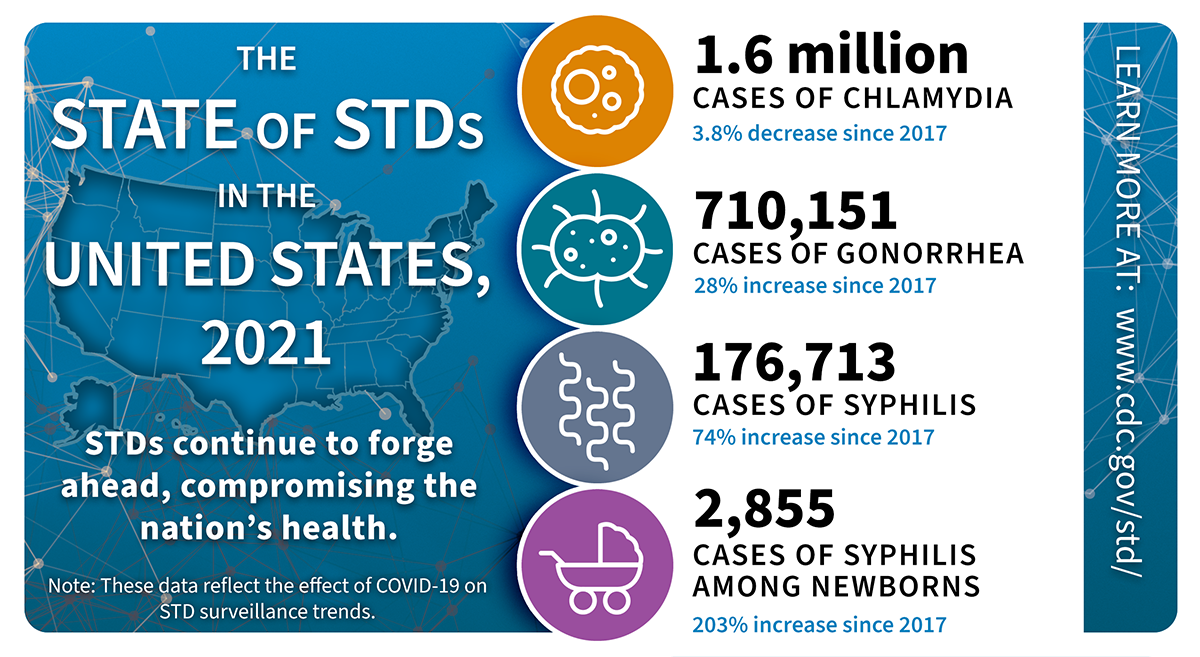
It is easy to understand the concerns about the some of the statements Sexy Red made in her interview. Still, it is important to raise awareness about some specific concerns if one chooses to engage in sexual activity. Check out the graphic from the Centers for Disease Control and Prevention (CDC) below regarding sexually transmitted diseases (STDs) in the United States.

Additionally, it is important to understand that consistent and correct use of latex condoms can drastically reduce the risk of gonorrhea, chlamydia, and trichomoniasis. Latex condoms can also reduce the risk of genital herpes, syphilis, and chancroid, working when a person’s infected area or site of potential exposure is protected (CDC, 2023). Check out the links with each sexually transmitted infection or disease (STI or STD) to learn the facts about each.

If someone has concerns about latex condoms, some condoms are made of other materials (i.e., polyurethane, polyisoprene, and nitrile) are great for people who have latex allergies or sensitivities. Still, these condoms may be slightly less effective at preventing STDs than condoms made from latex (Marfatia, Pandya, & Mehta, 2015).

If choosing to engage in sexual activities, health experts from the CDC and Planned Parenthood encourage individuals to consider the following tips:

For more tips and to learn more about protecting yourself during sexual activities, please check out the links above. Want to talk some more, check out our Facebook page here: @phame.us.impact.

References

Center for Disease Control and Prevention. (2023, September 5). U.S. STI Epidemic Showed No Signs of Slowing Down in 2021 – Cases Continued to Escalate. https://www.cdc.gov/nchhstp/newsroom/2023/STD-Surveillance-Report-2021-media-statement.html

Center for Disease Control and Prevention. (2023, September 5). How can I Protect Myself from HIV?. https://www.cdc.gov/hiv/basics/hiv-prevention/protect-yourself-during-sex.html

Marfatia YS, Pandya I, Mehta K. Condoms: past, present, and futureIndian J Sex Transm Dis AIDS. 2015;36(2):133–9. doi:10.4103/0253-7184.167135