By Reginia Dodson | UAB Community Health and Human Services Intern

I planted a vegetable garden. At the time, I had no idea that it would prove to be therapeutic for me. It is only a small, raised bed garden that I somehow have planted to an overflowing capacity. This makes for a battle to keep my squash, zucchini, and eggplant from taking over the entire little box. Along with these aggressive space invaders, I planted tomatoes, okra, and cabbage as well. I even think that it is quite possible that I created an entirely new vegetable due to the overcrowding and plants mixing together. OK, I am joking, but still…there is joy in planting this garden.
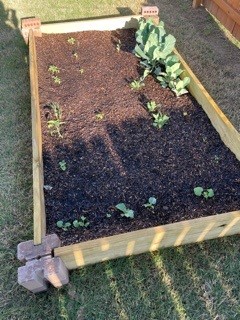
When I began gardening, I did not realize that it would become my place and time to disengage from all the stressors in my life. Each day as I tackle the invaders growing and the natural intruders, I find myself relaxing and calming my anxieties. It is something to feel the cool soil as I dig around with my bare hands. I feel a connection with nature each day that I am in my garden.
I am not the only one who feels this way. Rooftop gardening, yes…on the roof, has been associated with better personal development and suggested enhanced physical and emotional well-being, sense of purpose, social inclusion, interpersonal relations, and quality of life (Triguero-Mas et al, 2020). What happens on the roof, happens on ground as well. I am always in my garden early in the morning before the world around me awakens. It is so serene and peaceful. I find even my breathing is more relaxed and the time helps to prepare me for the stressors I will encounter during the day. Furthermore, there are times that my family and friends get to enjoy the garden as we come together, supporting my happy pursuits with some good work and fun. Not to mention, good food afterwards.
It is also delightful to find what has grown seemingly overnight. I see it as a life metaphor, patiently waiting to see the work of my hands and nature come together to bring life into the world. I laugh at times because I never saw myself gardening. Especially, using my bare hands while doing so…oh the dirt and grime. So what about you? Do you have a garden? Are you good with plants? Do you find peace and delight working with nature? Leave your comments below.
References
Suggested citation for this article: Triguero-Mas M, Anguelovski I, Cirac-Claveras J, Connolly J, Vazquez A, Urgell-Plaza F, et al. Quality of Life Benefits of Urban Rooftop Gardening for People With Intellectual Disabilities or Mental Health Disorders. Prev Chronic Dis 2020;17:200087. DOI: http://dx.doi.org/10.5888/pcd17.200087external icon

 PHAME-US