Tag: Racism

Previous experiences may bias our perceptions, even as racial bias does exist

By Aamya Wilson | UAB Community Health & Human Services Intern
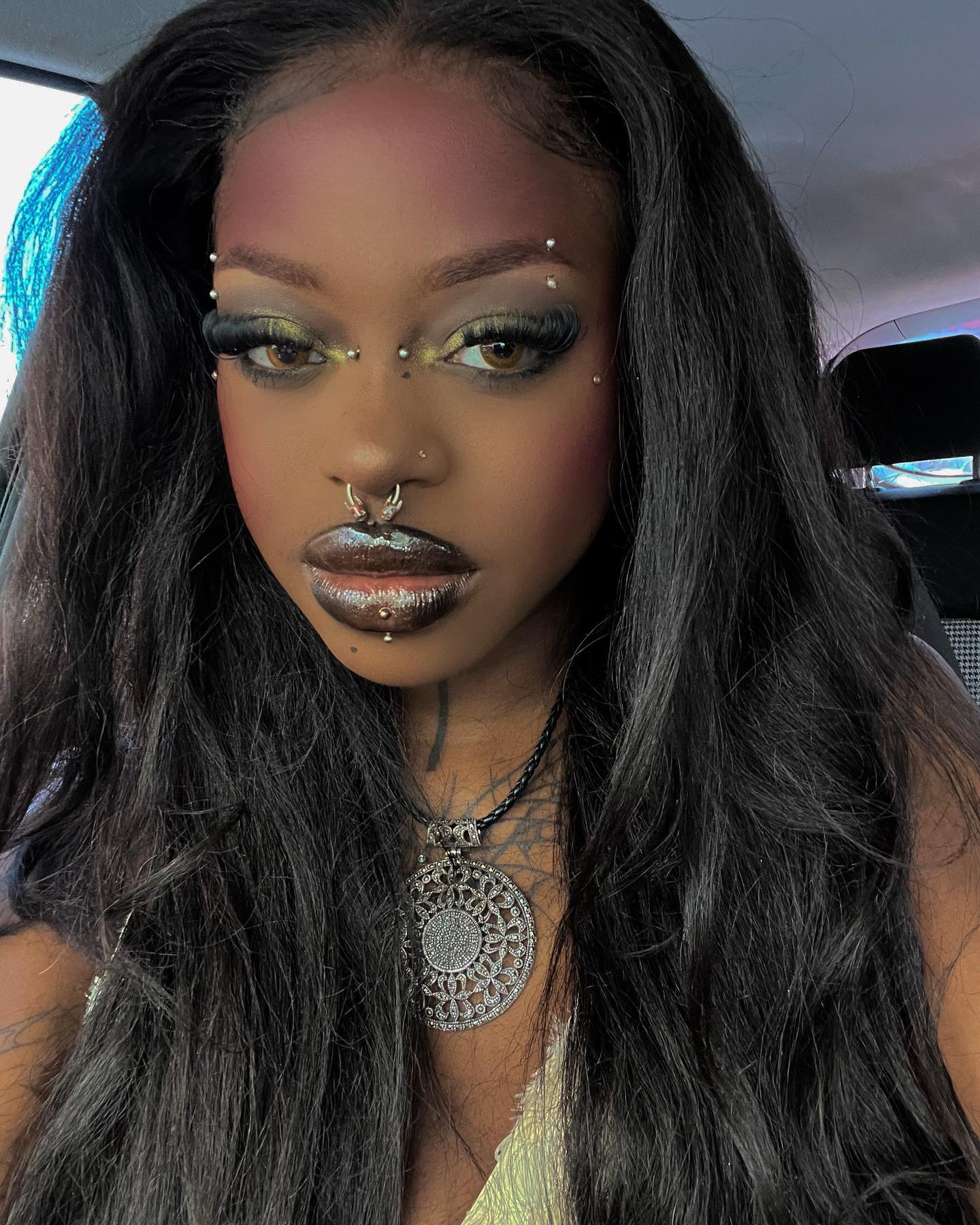
Our previous life experiences may influence the way we perceive the event we encounter daily. When we encounter past traumas, the effects can linger for a long time. Thusly, when aspiring musician Baby Storme experienced a process of protocols to prevent her from flash mobbing (i.e., shooting her video) in a Target, she may have and continue to view the incident through a lens filtered with previous racially biased experiences. Given the Target encounter shared over social media, Baby Storme sparked a firestorm of responses on the encounter with comments supporting her views that the incident is clouded in racism and others exclaiming that Target has a right to implement protocols preventing flash mobs and other activities on/in their premises.

Racism, according to the CDC, can be defined as a system that assigns value and determines opportunity based on the way people look or the color of their skin, which can unfairly advantage and disadvantage those within our societies (CDC, 2023). Some social media commenters claimed that Baby Storme played the “race card” and suggested “racism” was at hand in order to exploit the particular situation for gaining sympathy or advantage. Was the popular TikTok platform African American alternative pop music star using the history of racism in America as way to seek benefit or raise a level of support for her actions? Maybe. When she made allegations against Target for being racist by not letting her and her dancers perform within their establishment, she may have felt victimized due to her race as months earlier the artist experienced an incident where she feels she was racially profiled at a local Citibank branch when performing a transaction with a $30,000.00 check. According to her self-report on social media, the workers within that bank immediately confiscated her check and called the police on her during the process. Her emotional experience shared on social media offers insight to how the negative event made her feel. Taken into consideration, it may not be such a far reach to see how Baby Storme may have perceived the Target incident have been biased by race.

Let’s continue to be reasonable. Target is a public space for consumers and has a duty to keep their store safe and friendly for their customers. Target as a corporation is definitely within their rights to authorize their employees to implement protocols and practices to preserve store safety and be accessible for all customers. Thusly, it is OK for them to limit the actions of flash mobs, limiting public disturbances, no matter what time of night the flash mob occurs (i.e., near closing hours).

As social media has become the new outlet to express many negative encounters and discriminatory actions, we may do so without fostering understanding. True, a soundbite is not enough time to offer context and comprehensive truth. Still, if people have an aim for sharing experiences to foster understanding, then processes toward strengthening relationships among people from different backgrounds will provider greater solidarity within society. Because, racism and discrimination to continue to occur within American society. Perhaps with social media, people may believe these negative experiences happen more often than they do. That is why it is also important to remember the following:

  • Work to not dwell on negative or dark thoughts (i.e., I will not let this negative situation define me…)
  • Stop negative self-talk (i.e., I will work to find the humanity and beauty; I hope my offenders will be able to find the humanity and beauty of all people, etc.)
  • Reframe negative situations (i.e., Racial bias is real, but I am determined for people to know my character, value my culture,…)
  • Establish healthy patterns for yourself (i.e., engage in exercise, healthy eating, prayer, meditation, supportive relationships, etc.)
  • Embrace positive moments (i.e., reflect on the positive moments in your life)
  • of all people I hope that those offending me will be able to see the beauty of all people

What are your thoughts? How do you stay positive? How do you offer to others your experiences to support understanding among diverse people? Please share in the comments below and on Facebook, here.

Resources

CDC. (2023, August). Racism and health. Centers for Disease Control and Prevention. https://www.cdc.gov/minorityhealth/racism-disparities/index.html
Reflecting on a tragic moment of civil rights history and feelings of yesterday

Larrell L. Wilkinson | PHAME-US

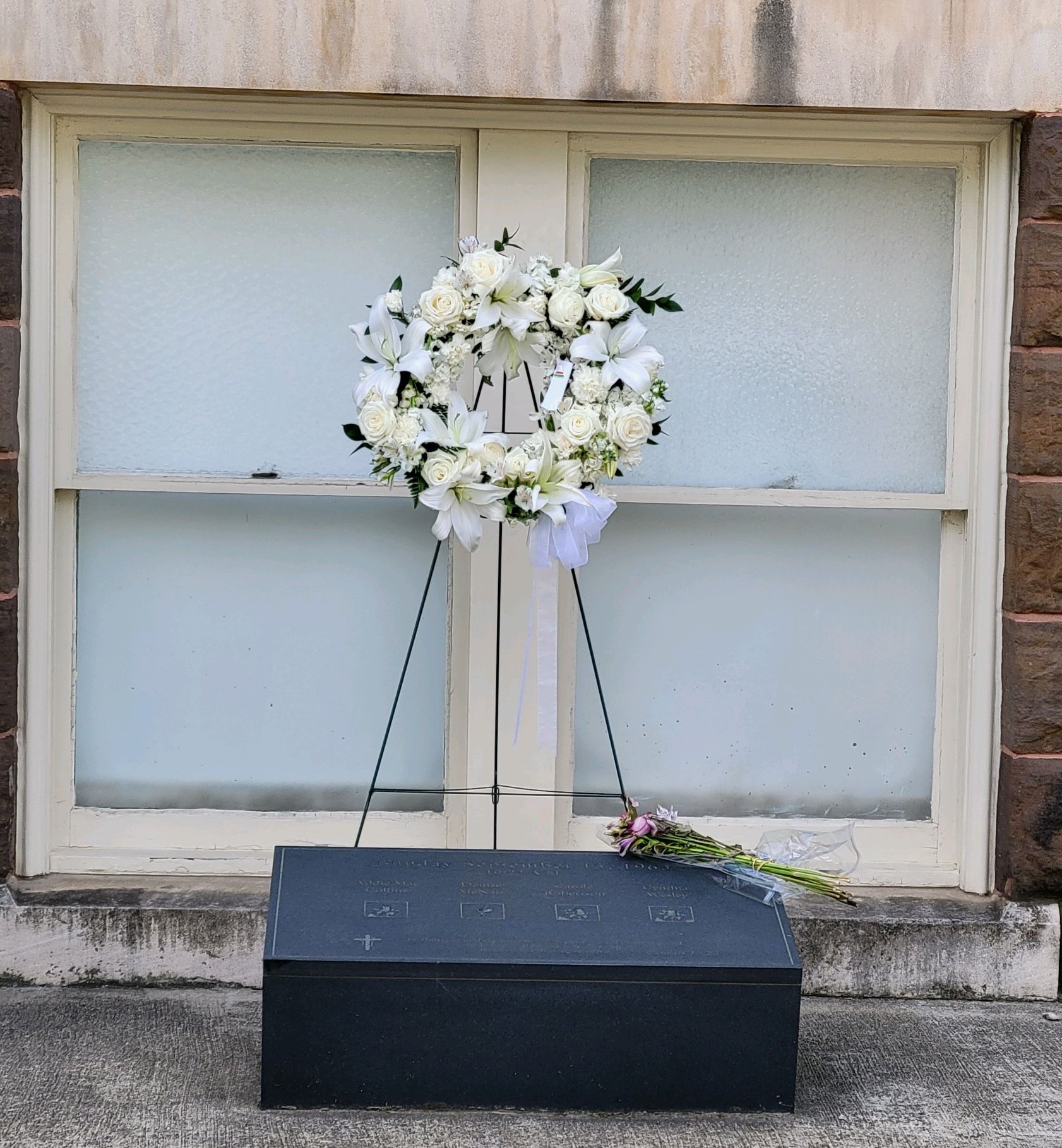
Photo of window at the 16th Street Baptist Church and memorial plaque honoring the memory of the four young girls killed by the KKK bombing of the the church on September 15, 1963.

I knew yesterday was going to hit me hard. During the early weeks of September in Birmingham, AL, the annual commemorations begin. This year marks 60 years since the tragic death of four little girls and the injuries of several others, during the turbulent days of the Civil Rights movement. The City of Birmingham honored the victims of the bombing of the 16th Street Baptist Church on September 15, 1963, during the week of remembrance.

Working in the Birmingham area, I often drive past the historic markers of the Civil Rights movement. I can see the A.G. Gaston Motel, the 16th Street Baptist Church, Kelly Ingram Park, the Birmingham Civil Rights Institute and drive to Montgomery, AL to the Equal Justice Initiative & National Memorial, Dexter Ave. Church, the Rosa Parks Museum, and sacred sites of the movement. This year, 60 years after that fateful day of losing Addie Mae Collins, Denise McNair, Carole Robertson, & Cynthia Wesley, I know that America has made progress towards racial conciliation. I see it daily at my job, during worship occasions at my church, in visiting my children’s school, walking my neighborhood and patronizing businesses in my community. Still, exercising faith for a future that overcomes the actions of hatred manifested by individuals and groups that want to further efforts to separate us in the U.S., by race, by class, by the faith we practice, by any means that furthers their hate filled mission, that faith must be strong and resilient.

The actions of 60 years ago may seem like history to some but are very relevant to communities of people who have additional concerns when we go for a jog, shop at our community stores, or worship in our churches. Our families trade text messages to remind each other to “be safe”, “travel in groups”, “don’t travel at night”, “don’t get off the phone until you get home”, “don’t get gas at night”, “don’t stop at any stores tonight, we’ll order it later”, etc. Perhaps some if you are reading this, you might say, these sayings sound like useful tips. In contrast, others reading these words understand that these aren’t just tips, but necessary actions of life preservation for people feeling maliciously targeted due to their culture. For many, events that happened 60 years ago doesn’t feel like history, it feels like yesterday. Still, these groups of people press forward in hopes that their girls and boys will experience a society where the actions of a hateful few are no longer. Their hope is in a loving God, with the direction to love Him and to also love your neighbor as yourself (New International Version, Matt. 22: 34 – 40). It is in experiencing this form of solidarity that we can share in faith, hope, and love; love being the greatest of these (New International Version, Cor. 13:13).

Taraji P. Henson Brings Awareness to Mental Health

By Terrie Johnson | UAB Community Health & Human Services Student

Photo by Mizuno K on Pexels.com

Recent attention has been brought to the fact that there is an aspect of adolescent mental health that is often ignored. According to Taraji P. Henson, who serves as a self-appointed ambassador for juvenile mental health, African American youth often experience race-based educational bias (People, 2021). This is closely connected to the fact that these young people commonly receive harsher punishments from school administrators for disciplinary measures. When this occurs, it not only amplifies the school to prison pipeline, but it also makes African American youth feel they are unworthy of empathy, compassion, and/or leniency (People, 2021).  

As a result of this continuing trend, Henson feels African American youth develop anxiety, depression, and a desire to practice social isolation. To prevent adding to reduced mental health in this population, it is encouraged that educational institutions not criminalize actions beyond the measures given to the peers. To assist with this, Henson launched the Unspoken Curriculum. This is a mental health education initiative that addresses persistent psychological risks faced by young black students in the education system (People, 2021). The 6-week program seeks to identity, define, and increase understanding of the existence of race-based educational bias (ABC News, 2021).

With celebrities like Taraji P. Henson joining the fight to save African American youth, average individuals should also feel empowered to evoke. Citizens can rally parents to reach out to school administrators and superintendents through letters and emails to ensure these children are shown kindness, grace, and consideration (ABC News, 2021). They can also enroll youth in the Unspoken Curriculum or similar mental health education programs. This can increase their ability to deal with external and internal stressors in an acceptable and healthy fashion. Overall, the goal is for the nation to join the prevention of criminalizing African American youth in educational institutions (ABC News, 2021). What are your thoughts on ways schools can assist with good mental health for young African American students?

References

ABC News. (2021). Taraji P. Henson talks campaign to address mental health risks for Black

students. ABC News. https://abcnews.go.com/GMA/Culture/video/taraji-henson-talks-

campaign-address-mental-health-risks-77823025

Calhoun, Amanda. (2021). The Intersection of Black Youth Mental Health and Racism

Medpage Today. https://www.medpagetoday.com/opinion/theactivistpsychiatrist/95422

People Magazine. (2021). Taraji P. Henson launches campaign to help black students fight mental health struggles. PEOPLE. https://www.youtube.com/watch?v=-cPJitRAM78

Supporting HBCUs to overcome historic underfunding

By Terrie Johnson | UAB Community Health & Human Services Intern

Photo by Ron Lach on Pexels.com

Historically Black Colleges and Universities (HBCUs) have a history in the United States of being underfunded due to varied underlying factors. One of the reasons may the history of systematic inequities. In other words, the discriminatory practices prevalent during the history of the United States, may still impact Black institutions today. Throughout the history of HBCUs, the principal mission has been to education the African American population. Since HBCUs have been tied to the Black population, they are often on the receiving end concerning limited funds allocation (Bagasra et al., 2022). Over time, this issue has caused chronic state underinvestment in HBCUs. Thus, such institutions continue to suffer from a lack of critical funds to run operations.

Additionally, lower alumni contribution is a factor in the continued underfunding of HBCUs. However, this issue is also linked to the socioeconomic position of many African-Americans within the United States. For example, most HBCU alumni earn less when compared to their White college graduate counterparts (Bagasra et al., 2022). This situation creates a gap in the level of contributions that Black alumni from HBCUs can make to advance the institutions. The amount of Black wealth in the United States is comparatively lower. As such, it cannot provide the needed funding to advance the functionality of HBCUs. The current situation in the country, whereby Blacks have limited economic opportunities, further perpetuates the financial circumstances of HBCUs (Bagasra et al., 2022).

Despite the financial pressures experienced by many HBCUs, can be increased through the adoption of critical best practices. For example, a public-private partnership can be encouraged to increase funding sources for institutions. The creation of greater awareness regarding this initiative will advance contributions toward the improvement of HBCUs (Jones et al., 2017). Moreover, greater advocacy for equity at the state and federal level can lead to changes in policies that provide greater support to HBCUs. Improved educational experiences may lead to advancements in African-American capital, which in turn would allow for alumni to give back to their HBCUs. This is why all African Americans should consider contacting (i.e., tweet, email, letters, phone calls, etc.) their state and federal representative and government leaders advocate for more HBCU funding. Check out this link for the United Negro College Fund (UNCF) to learn more and advocate. Share your advocacy story with us in the comments section or on Facebook.

References

Bagasra, A., McLetchie, A., & Wesley, J. (eds.). (2022). Contributions of historically black colleges and universities in the 21st century. IGI Global.

Jones, T., Jones, S., Elliot, K., Owens, L., Assalone, A., & Gándara, D. (2017). Outcomes based funding and race in higher education: Can equity be bought? Springer.

Overcoming the Mental Health Stigma and Seeking Mental Care

By Tan Walker | UAB Community Health & Human Services Intern

Photo by Alex Green on Pexels.com

Suicide was the second leading cause of death for African Americans ages 15 – 24 in 2019 (Office of Minority Health, 2022). This alarming trend is very concerning, particularly because mental health professionals believe they can support these young people through their circumstances. The highest proportion of suicide deaths occurs among African Americans, ages 25-34. Why is this happening?

African Americans (AAs) may be stigmatized against seeking help from mental health professionals. This thought process may be linked to a cultural legacy where AAs endured the surviving of many cruel and inhumane circumstances within the United States. Many African Americans experience poverty at least once in their lives. This alone has negatively affected the mental health status of the black community. In fact, those living below the poverty level are twice as likely to encounter serious psychological distress (Office of Minority Health, 2022).

When encountering hardships, African Americans may work to suppress their emotions, resulting in them “doing what they have to do” to make it through each day. Taking mental breaks, seeking therapy, and expressing thoughts and feelings are not often discussed or practiced in the African American community.

Unfortunately, suicide rates among Black Americans have continued to progressively increase since the beginning of the COVID-19 pandemic. What better time to be proactive in addressing it than now?

Suicide is one of the most preventable public health problems, and young adults are at higher risk than any other demographic. Here are a few suicides prevention tips for young African American adults:

– Know the Signs
– Practice Self Care
– Research local counseling resources
– Call, text, or chat 988 to get connected with the National Suicide Prevention Hotline

References

Office of Minority Health. Mental and Behavioral Health – African Americans – The Office of Minority Health. (n.d.). Retrieved September 3, 2022, from https://minorityhealth.hhs.gov/omh/browse.aspx?lvl=4&lvlid=24

Schimelpfening, N. (2020, December 8). How you can help someone one is suicidal. Verywell Mind. Retrieved September 3, 2022, from https://www.verywellmind.com/suicide-prevention-tips-1067531

Working to Be Heavenly Minded & Earthly Good…

By Larrell L. Wilkinson

Photo by Ric Rodrigues on Pexels.com

Many have heard the Bible verse, “But seek first his kingdom and his righteousness, and all these things will be given to you as well” (Matthew 6:33, NIV). So being real for a moment, many of us do become distracted and/or challenged in the action of first seeking His kingdom and righteousness. We are challenged in making Him the priority over things of the world. So often our troubles in and of the world take precedent in our daily lives. Whether personal or social, a person may wake up thinking about their troubles or literally “yell angry expressions through typing” on Twitter to express their opinion about a particular topic that irks them. Let’s not forget our instinctive reaction to people who cut us off on the freeway! These first thoughts, instinctive reactions and/or expressions on social media may occur before we have once prayed to God about the problem or meditated on the “trouble” given God’s instruction to us from His Word.

Let me be clear, there are many serious trials and tribulations that we may encounter in life. For James wrote, “Consider it pure joy, my brothers and sisters, whenever you face trials of many kinds, because you know that the testing of your faith produces perseverance. Let perseverance finish its work so that you may be mature and complete, not lacking anything” (James 1:2-4, NIV). Consider it “pure joy…”, REALLY? It tough dealing with challenges like hate through racism. Lord, I really rather not have to deal with the stresses of racism or concern myself with how racism may impact my children. And what about other hardships? What if a couple is going through a rough patch in their marriage; a person is battling with serious illness; and/or coping with other inequities within society…I mean who really desires to be faced with these other difficult life circumstances.

Still, I want to encourage us to press into God (& His kingdom) more! Practicing patience, finding joy in hope, and being consistent in prayer (Romans 12:12) may help us to resolve our personal troubles. The book of Isaiah suggest that we do right; seek (require or demand) justice; defend the oppressed; take up the cause of the fatherless; and plead the case of the widow (Isaiah 1:17) within society. This is how we can work to address some major issues impacting our local communities. For the last part of Matthew 6:33 says, “…and all these things will be given to you as well.” Thus, God is telling us that racial reconciliation, health and recovery, a flourishing society, a better marriage, overcoming our personal challenges…can occur when we seek His kingdom and His righteousness.

No one is saying it will be easy, at least I’m not. As a matter of fact, or my opinion, I believe it may be extremely difficult to address challenging areas in our personal lives and socially. Plus, we must consider God’s timing and that His ideas may be different than our expectations. Still, working to seek God and His kingdom FIRST, is our FIRST step to addressing problems in our lives. Second, I believe it is important to change our own attitudes positively about the challenges that we experience. This is why James says, “consider it pure joy” and I am sharing with you that I am a “work in progress.” To help me, I am intentional about keeping positive and healthy family/friends/mentors around me from whom I can seek good advice and social-emotional-mental-physical-financial support. A church can be helpful in this endeavor as well. Finally, I also work to accomplish small tasks around me, challenging myself to take on bigger issues as I build momentum (confidence) with smaller successes.

So what about you? How do you address challenges in your life? What concerns can PHAME-US Life help to encourage you through from the “test” to the “testimony” for others to see? Feel free to share in the comments section or join us on social media. May God Bless You and Yours.

This Little Light of Mine, I’m Going to Let it Shine: Dr. Martin Luther King, Jr. Day 2021

I can remember hot Sundays and weekdays sitting in the pews of hot Mississippi churches listening to my grandmothers sing:

“This little light of mine,

I’m gonna let it shine, (Ohhh!)

I’m gonna let it shine

This little light of mine

I’m gonna let it shine

Let it shine, let it shine, let it shine…”

If you have never heard a deep, southern gospel group of adults or even children sing this song, well, run to YouTube quickly and find some videos or download the music at Apple, Amazon, Google, etc. The song can be an uplift, whenever you need it most. I can still hear both of my grandmother’s voices in my inner ear, singing this song among the other church choir members. At one of my home churches in Mississippi, I can hear the choir singing under the direction of my aunt playing the piano and keying up the verses. I am telling you; the church was hot with the bright sun beams coming down on both of my family churches (in different parts of the State of Mississippi), but the song was “SANG” the same. I can still hear the passion in the voices of the choir, most of them older women: mothers, grandmothers, aunties, cousins, sisters, family…instructing us in the audience to let our light shine.

Most of the church was much older than me. My grandparents’ generation lived through World War II, Jim Crow Laws of the South, and the Civil Rights struggle and gains of the 20th Century. They combatted the ugliness of racism: burned down African American owned stores, fire bombed churches, challenges to perform the guaranteed civic duty of voting, discrimination, and racial bias in the Armed Services while fighting for the United States of America, inability to get farm loans, etc. because of the color of their skin. But through it all, they “let their light shine.” By law, it was determined that they would live as second-class citizens in the South, segregated as “separate and unequal” and through it all they “let their light shine.”

It didn’t matter if you were an older adult, adult, teenager, or child…in the church, listeners were told:

“Everywhere I go

I’m gonna let it shine

Everywhere I go

I’m gonna let it shine

Everywhere I go

I’m gonna let it shine

Let it shine, let it shine, let it shine.”

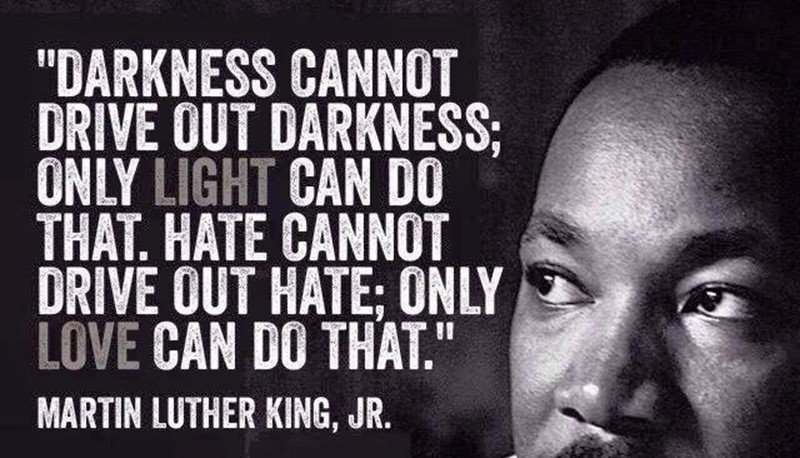
And why? Why did (do) we have to shine the light? It is true that the Bible reads, “In the same way, let your light shine before others, that they may see your good deeds and glorify your Father in heaven” (Matthew 5:16, NIV). But I tell you more practically, my grandmothers and the leaders of their generation were singing more practically. They were teaching and encouraging, saying to combat White Citizen’s Council policies, redlining, Jim Crow Laws, lynching, unlawful arrests, racial profiling, and other violations of African Americans (& People of Color) civil rights, we must let our light shine. They did GOOD when faced with EVIL, demonstrated LOVE when given HATE, and offered FORGIVENESS (not forgetfulness) when presented MEANNESS, OPPRESSION, and OFFENSE. The choir knew what the Rev. Dr. Martin Luther King, Jr. once said, “Darkness cannot drive out darkness, only light can do that. Hate cannot drive out hate, only love can do that.” Let’s choose to love today and every day, loving our neighbor (others) as we do ourselves (Mark 12:31, NIV). Love to all of you and thank you for your leadership Rev. Dr. Martin Luther King, Jr. May we continue to let our light shine!

Reflection on the Killing of Mr. Ahmaud Arbery

I walk/jog/run most days of the week. I walk/jog/run for my health & well-being. I encourage other men who look like me to walk/jog/run for their health & well-being. I encourage ALL people to “Love the Lord your God with all your heart and with all your soul and with all your mind and with all your strength” & “Love your neighbor as yourself” (Mark 12:30-31, NIV).

I cannot explain the tragic circumstances of #AhmaudArbery. My hope is WE can ALL work towards LOVING our God and LOVING our fellow MAN. Perhaps when we treat each other the way we would want to be treated, then these tragic events will decrease and end. Heavenly Father, I pray for peace, love, strength, encouragement and comfort for the family of Ahmaud Arbery. I pray the same for all the many families who have lost loved ones due to violence. God, grant us the serenity to accept the things I cannot change, the courage to change the things I can, and the wisdom to know the difference. Lord, please embolden men and women in solidarity with each other, in You, to champion the causes of the just, the good, the defenseless, and those experiencing unfortunate circumstances. May we speak up and judge righteously. Amen.

Reflection on the Killing of Mr. George Floyd

To all my Brothers | Sisters | Those I Have Yet to Meet: “‘Love the Lord your God with all your passion and prayer and intelligence.’…’Love others as WELL as you love yourself.’ These two commands are pegs; everything in God’s Law and the Prophets hangs from them” [Matthew 22: 37-40, MSG].

No matter one’s skin color or social standing, I encourage ALL to at least value the lives of others while working toward loving others. If you find it challenging to value the life of another and/or LOVE others, then my prayer is that you will open your heart to God and allow Him to “transform your heart & mind.” Let us work to not believe all the negative stereotypes about people we don’t know. Instead let us challenge our thinking, be intentional about overcoming biases, and work to do “life” with one another. In the process, we will learn to love one another. Strength, Encouragement, & Comfort to the family of Mr. George Floyd. #georgefloyd #racisimisasin

A Call for Solidarity, Working against Racism & COVID-19

By Larrell L. Wilkinson

On April 8, 2020, Dr. Tedros Adhanom Ghebreyesus called for greater unity in efforts to combat COVID-19. Since taking office in May 2017, the World Health Organization’s (WHO) Director-General outlined five priorities for the WHO: universal health coverage; health emergencies; women’s, children’s and adolescents’ health; health impacts of climate and environmental change; and a transformed WHO. Dr. Tedros previous experiences included serving as Ethiopia’s Minister of Foreign Affairs from 2012–2016 and Ethiopia’s Minister of Health from 2005–2012. Dr. Tedros holds a Doctor of Philosophy (PhD) in Community Health from the University of Nottingham and a Master of Science (MSc) in Immunology of Infectious Diseases from the University of London.

Earlier today, Dr. Tedros remarked about the first 100 days of the WHO’s efforts to address COVID-19.

In his remarks on April 8, 2020 regarding WHO’s effort against COVID-19, the Director-General focused at least some of his comments on racism and unity. “I can tell you personal attacks that have been going on for more than two, three months. Abuses, or racist comments, giving me names, black or Negro. I’m proud of being black, proud of being Negro,” exclaimed Dr. Tedros Adhanom Ghebreyesus related to comments and threats made against him in the wake of this pandemic and questions regarding WHO’s response. He also called for solidarity in efforts to address COVID-19, stating “My message to political parties: do not politicize the virus. If you care for your people, work across party lines and ideologies.”

A lot has been learned since the reception of the first reported case of pneumonia from an unknown cause was officially received at the WHO on December 31, 2019. This case was first detected in Wuhan, China and received from the WHO Country Office in China. As more has been learned and efforts have been made, public health officials and leaders around the world have continually refined their initial and subsequent efforts to address COVID-19. The WHO is no different in their process of “learning as they address, refining towards progress.”

All of us have a role in this fight (COVID-19) that threatens our health, our humanity. Let’s work to not add to the unfortunate circumstances by exploiting differences among us. Instead, let’s build on our common humanity, show the love of Jesus Christ, and work towards solutions together.